

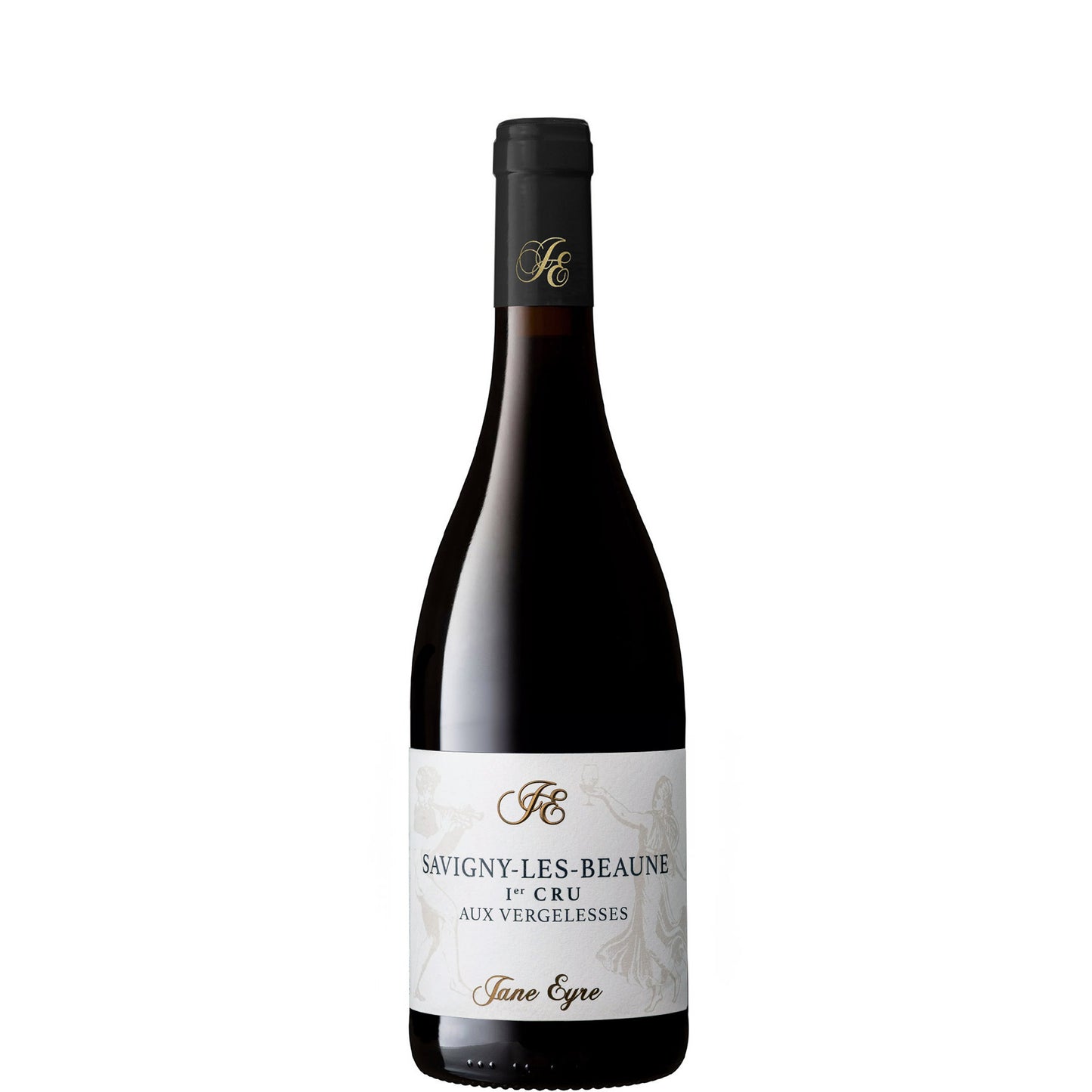
Savigny-lès-Beaune Premier Cru 'Aux Vergelesses', Jane Eyre, 2021
Savigny-lès-Beaune Premier Cru 'Aux Vergelesses', Jane Eyre, 2021
- 75cl
- 13%
- Red Still
- Pinot Noir
Couldn't load pickup availability

Optimal drinking window: Now - 2035
Savigny-lès-Beaune doesn't always get the headlines it deserves, sitting quietly in Burgundy's shadow while its neighbours in Pommard and Volnay collect the glory. That's rather their loss. Aux Vergelesses is one of the village's finest premier cru sites, a north-facing slope on the Pernand-Vergelesses border where the limestone-rich soils and cooler exposure push Pinot Noir towards something more structured and mineral than the plush, giving style you find elsewhere in the Côte de Beaune. Jane Eyre's 2021 is a wine that earns its keep through detail rather than volume.
The 2021 vintage was a difficult one — frost, mildew, small yields — but those who farmed carefully and sorted ruthlessly made wines of real precision and energy. This has the hallmarks: bright, focused fruit with genuine grip and a saline, chalky thread running through the finish.
In 2026, Aux Vergelesses is still in its primary phase — the fruit is bright and present but the wine's full complexity hasn't yet assembled itself. From around 2027-2028, expect the tannins to settle and secondary notes of forest floor, dried herbs, and game to start emerging alongside the red fruit. The window from 2028 to 2032 is likely to be its sweet spot, when the structure and the fruit are in genuine harmony. Hold until 2035 if you have the patience and the storage; beyond that, the fruit may start to thin and it becomes a matter of personal taste for how earthy you like your Burgundy.
Tasting Notes
AppearanceClear, mid ruby with a faintly translucent rim — classic cool-vintage Pinot Noir.
NoseRed cherry and crushed raspberry, with a sous-bois earthiness underneath and a flinty, chalky lift that gives the whole thing a sense of focus. There's a floral edge too — dried rose petals — that speaks clearly to the site. Nothing showy, everything precise.
PalateTaut and structured, with bright acidity and fine, grippy tannins that are present but never harsh. The fruit is red rather than dark — cranberry, pomegranate, a little blood orange — with a mineral, almost saline quality on the mid-palate. It's lean in the best possible way, like a well-cut suit rather than a bulky one.
FinishLong and pleasingly dry, with that chalky mineral note carrying through and a faint spice on the very end.
Overall impressionA wine of real discipline and site character — needs a year or two more, but the bones are excellent.
Food Pairings
In Burgundy, a wine like this would most naturally find itself alongside a poulet de Bresse roasted simply with butter and tarragon, or a slow-braised rabbit with mustard and crème fraîche. The locals are also fond of jambon persillé — the cold pressed ham and parsley terrine that's a Burgundian Sunday staple — which works beautifully with the wine's savoury, mineral edge. Coq au vin, made properly with a decent bottle poured into the pot, is the obvious answer for a colder evening. Hard to argue with.
We think this wine would go well with
Serve at around 15-16°C — cool enough to preserve the wine's freshness and structure, but not so cold that it shuts the fruit down. A 20-30 minute decant is worth doing right now, mainly to open up the nose and soften the tannins slightly. A large-bowled Burgundy glass will give the aromas room to develop without overwhelming the wine's innate delicacy.
Aux Vergelesses sits at the northern end of Savigny-lès-Beaune, on slopes that face northeast and border the appellation of Pernand-Vergelesses. The soils are predominantly limestone and marl, with a clay component that adds body and helps retain moisture in dry years. The cooler exposure relative to the south-facing Beaune premier crus means ripening is slower and more measured, producing wines with higher natural acidity and firmer structure. This is exactly the kind of site that gives Savigny its most age-worthy, mineral-inflected reds.
Savigny-lès-Beaune is a village appellation on the Côte de Beaune, wedged between Beaune itself and Pernand-Vergelesses. It has no grand crus, but its two dozen premier cru sites are divided between two distinct valley slopes that produce quite different wines. The Vergelesses side, bordering Pernand, tends towards firmer, more mineral wines; the Marconnets side, closer to Beaune, is rounder and more immediately approachable. The appellation allows only Pinot Noir for reds and Chardonnay for whites, and at their best the premier crus here represent some of Burgundy's finest value relative to the attention they receive.
The 2021 growing season in Burgundy started badly and got worse before pulling off one of wine's great escapes. Spring frost in April devastated vineyards across the Côte d'Or, followed by a summer that alternated between biblical downpours and scorching heat. Many producers lost 50% or more of their crop to the frost alone, then watched hail batter what remained in some unlucky villages. By August, with rot creeping through rain-soaked vineyards, even the most optimistic vignerons were writing off the vintage.
What emerged from this chaos surprised everyone: wines with remarkable freshness and purity, if you can find them. The tiny yields meant those grapes that survived were intensely concentrated, while the September sunshine saved the day with perfect ripening conditions. We find the reds show beautiful fruit clarity without heaviness, drinking with an immediacy that makes them irresistible now but promising a decade or more of evolution. The whites are particularly stunning, with a mineral intensity that cuts through their richness. Yes, there's not much 2021 Burgundy about, and yes, it's expensive, but this is one of those vintages where disaster bred greatness.
FAQs
What does this wine taste like?
Taut and focused, with red cherry, pomegranate, and a mineral, chalky quality that runs from nose to finish. It's a structured style of Burgundy — precise rather than plush — with real site character from the Aux Vergelesses premier cru slope.
When is the best time to drink this?
It's approachable now with a short decant, but we'd suggest holding until 2027 or 2028 for the full picture. It should drink well until at least 2035, with the sweet spot likely between 2028 and 2032.
What food should I serve with it?
Classic Burgundian fare works best — roast chicken, rabbit with mustard, or a jambon persillé to start. The wine's acidity and savoury character also make it a natural match for mushroom dishes and anything with a cream or butter sauce.
How should I serve it?
Around 15-16°C is ideal. Decant for 20-30 minutes to open it up, and use a large Burgundy glass to give the aromas space without diluting the wine's delicacy.
Is this worth cellaring?
Yes — the 2021 vintage in Burgundy rewarded careful growers with wines of real precision and energy, and Aux Vergelesses is one of Savigny's finest sites for age-worthy reds. A few more years will make a meaningful difference to this one.
How does Savigny-lès-Beaune compare to better-known Burgundy villages?
It sits quietly between Beaune and Pernand-Vergelesses and rarely gets the same attention as Pommard or Volnay. That's partly what makes it worth seeking out. The premier crus on the Vergelesses slope produce structured, mineral reds that age just as gracefully as many better-known names, and at prices that still make sense.
Explore related wines


What are you looking for tonight? Tell me the occasion, a grape, a region — or just try a suggestion below.
Your recommendations will appear here.
-
-
Speak to one of our Wine Gurus
Speak to a Wine GuruWith years of experience, our team can help you with all your wine buying and selling needs