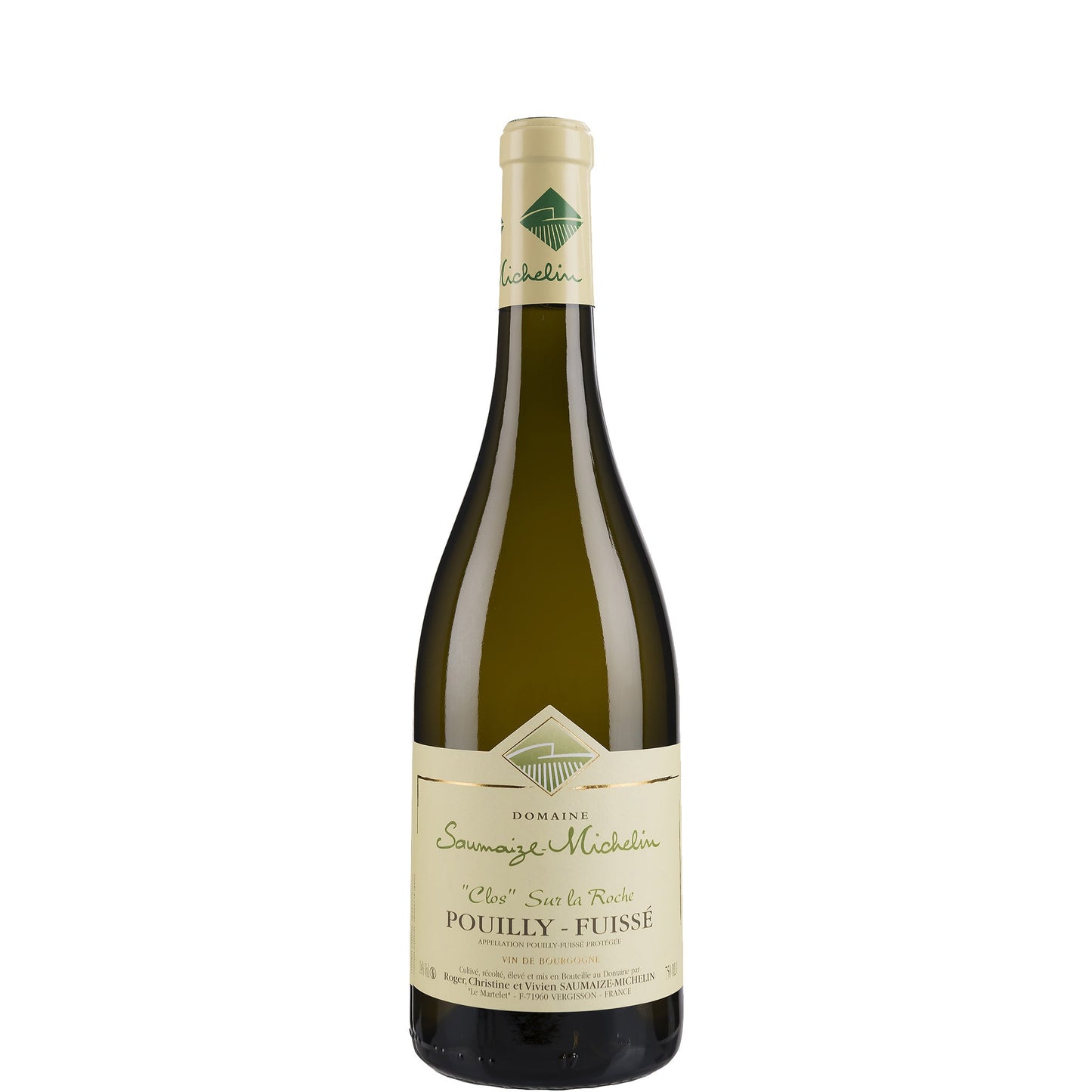
Pouilly-Fuissé Premier Cru 'Sur La Roche', Domaine Saumaize-Michelin, 2024
Pouilly-Fuissé Premier Cru 'Sur La Roche', Domaine Saumaize-Michelin, 2024
- 75cl
- 13.5%
- White Still
- Chardonnay
- Organic
- Biodynamic
Couldn't load pickup availability
Enquire about this item

Drinking window: 2027 - 2035
Pouilly-Fuissé has had a complicated reputation — too often dismissed as the southern Burgundy you buy when Meursault feels out of reach. The 2023 introduction of premier cru classifications changed that conversation, and 'Sur La Roche' was always going to be one of the sites that justified the fuss. Saumaize-Michelin farm it with the kind of quiet rigour that doesn't need advertising. The rock is right there in the name: this is limestone-driven, saline, and purposefully taut rather than generous.
The 2024 vintage in the Mâconnais was bright and precise, with natural acidity that kept everything honest, and this wine has it in spades; white peach and apple skin, a streak of white pepper, and that distinctive chalky pull on the finish.
What the critics say:
"The 2024 Pouilly-Fuissé Sur La Roche 1er Cru comes from a parcel with shallow soils (30 cm) and more exposure to the wind, the vines planted around 110 years ago. This is more expressive on the nose, with touches of fennel and fern. The palate is very refined with a silver thread of acidity that cuts through the citrus-fresh fruit, with just the right amount of bitterness and perfect sapidity on the finish. Have another bottle handy — don't tell me I didn't warn you."
"Just 50 meters from La Maréchaude, this is markedly different in its expression. The nose is reserved saved some lemony accents, but the palate is rather exotic with strong floral tones alongside endive and celery. Pleasant bitterness (“les bons amers”, as the French say) provide another set of textural modulation. Delicate yet concentrated!"
The 'Sur La Roche' vineyard sits directly below the great limestone escarpment of Vergisson, with poor, rocky soils dominated by hard limestone and clay over Jurassic bedrock. Vines here have to work for moisture, which concentrates flavour and drives the mineral tension the wine is known for. The altitude and exposure give natural freshness, and the proximity to the rock face creates a distinctive saline, almost flinty character that sets it apart from the richer, more voluptuous vineyards to the south of the appellation.
Pouilly-Fuissé is the flagship white appellation of the Mâconnais, producing Chardonnay from five communes — Fuissé, Solutré-Pouilly, Vergisson, Chaintré, and Prissé. It gained its premier cru classification in 2020, with wines from those sites first appearing in 2023, bringing long-overdue structure to an appellation that had always under-performed its potential on paper. The style leans fuller and more textured than Chablis, but less rich than the Côte de Beaune; at its best, it sits in an intriguing middle ground of stone fruit and mineral precision. Neighbours Pouilly-Loché and Pouilly-Vinzelles share the name but not the reputation.
The 2024 growing season in Burgundy was, frankly, a test of nerve. A wet spring brought significant mildew pressure, and vignerons who stayed sharp in the vineyard — working fast, keeping canopies open, reducing yields where necessary — came out the other side with something worth talking about. Summer brought warmer, drier conditions that helped the fruit recover composure, and harvest arrived broadly on the later side, with growers picking carefully to find phenolic ripeness without sacrificing freshness. Quantity was down across much of the Côte, which concentrates minds as much as it concentrates wine.
What emerged is a vintage that rewards those who put the work in. The Pinots we have tasted carry real precision and translucency — not because they are light, but because the acidity is lively and the fruit unforced. Chardonnays from the Côte de Beaune look particularly promising: taut, mineral, with genuine length. This is not a vintage to panic-open. Most village and premier cru reds want three to five years at minimum, with the better appellations drinking well until 2035 and beyond. The whites are more approachable now, though the best will reward patience too.