

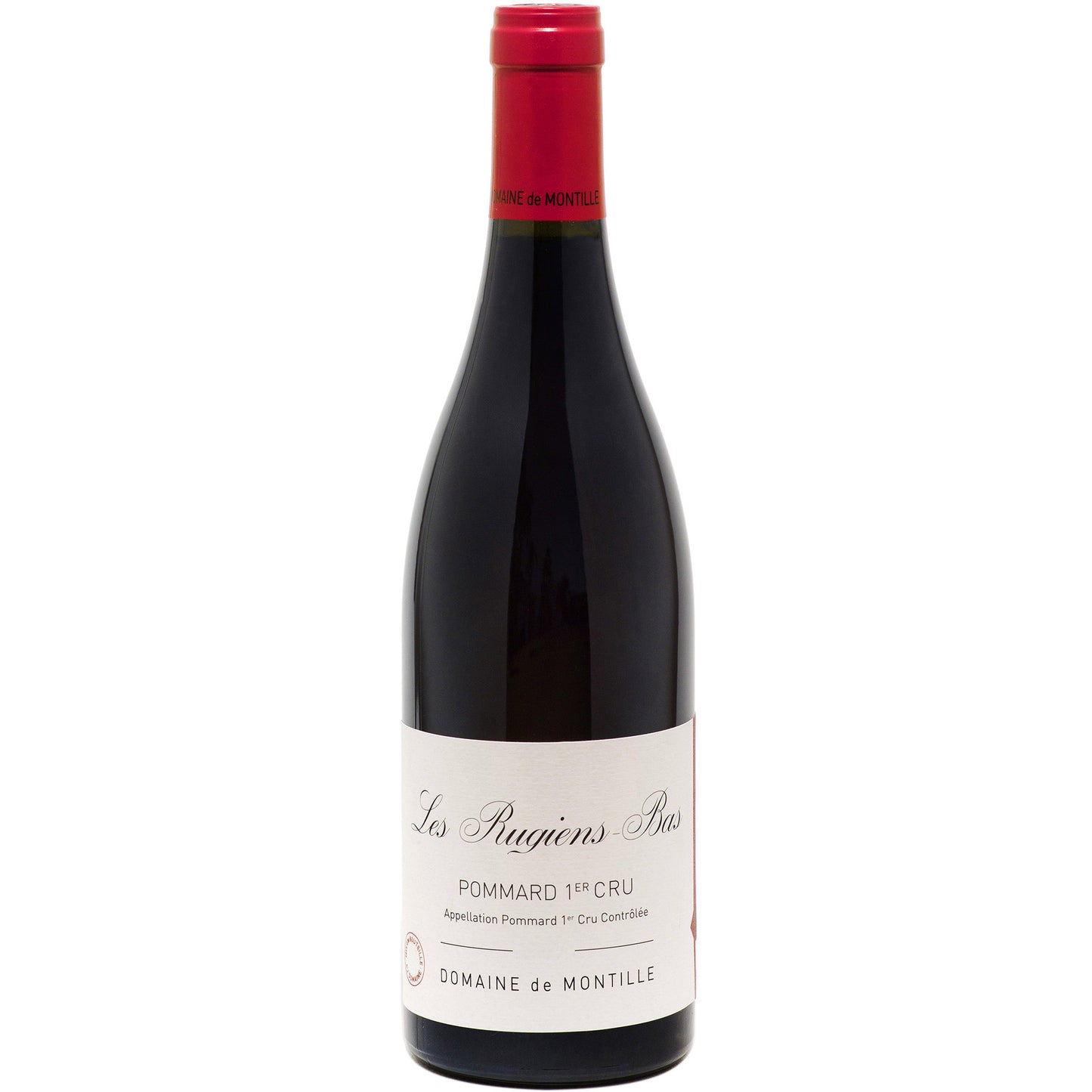
Pommard Premier Cru 'Les Rugiens-Bas', Domaine de Montille, 2024 - Magnum
Pommard Premier Cru 'Les Rugiens-Bas', Domaine de Montille, 2024 - Magnum
- 150cl
- 13.5%
- Red Still
- Pinot Noir
- Organic
- Biodynamic
Couldn't load pickup availability

Optimal drinking window: 2028 - 2045
Rugiens is the Pommard every grower wants their name next to, the 'Bas' half of the climat sitting on the iron-rich red clay and limestone scree that gives this wine its famous grip. Domaine de Montille has farmed this parcel with a scholar's patience for generations, and under Étienne de Montille's stewardship the wines have traded old-school muscle for precision without losing any of that structural backbone Rugiens is known for.
"Iron-rich and deeply savoury, with bloody, meaty notes, forest floor and restrained dark fruit. Serious, structured and unmistakably Rugiens."
Ksenia Pashkova, Club Merchandiser
2024 was a genuinely demanding year in the Côte de Beaune. Persistent rain and humidity from spring through harvest slashed yields and put relentless pressure on vineyard work, with timing and selection absolutely critical. At de Montille, decisions were calm, precise and unapologetically classical. Picking was about accuracy rather than courage, extraction was handled with restraint, and élevage kept firmly in service of site expression.
The results are impressive across both colours. These are not showy wines, but deeply articulate ones: transparent, savoury, and built to age. In a vintage where excess was an easy trap, de Montille has delivered wines that speak clearly of place, confirming once again why this remains one of the Côte de Beaune’s most serious and intellectually satisfying domaines, even when conditions are at their most uncooperative.
Domaine de Montille is one of Tim Atkin's 2024 Top 10 Côte de Beaune Red Wine Producers.
What the critics say:
"Les Rugiens-Bas has long been among the flagship cuvées of Domaine de Montille. In 2024, it produced a marvellous result, with ripe mulberry fruit and hints of tar, black tea and bay leaf. The texture is firm yet supple, with ample tannins restrained by gentle handling. The grapes are from a hectare of vines in two parcels – one more than 50 years old, and the second, younger. They were fermented as two-thirds whole bunch and are ageing in barrel, 40% new."
"The 2024 Pommard Les Rugiens-Bas 1er Cru has 50% whole cluster fruit. It has a more airy bouquet with vivid red berry fruit, rooibos and light scents of thyme and rosemary in the background. Fine delineation. The palate is medium-bodied with pliant tannins, a little fleshier and more smooth than the Pézerolles with a sensual finish. A quite delectable Pommard."
Les Rugiens-Bas sits on the lower, flatter part of the Rugiens climat, where the soil is a deep, iron-rich red clay mixed with limestone scree washed down from the slope above. That iron content is often credited with giving Rugiens its distinctive, almost bloody intensity compared to the paler-soiled Pommard crus. The exposure is south-easterly, catching good morning sun, and the clay's water retention helps the vines cope in drier vintages, lending real backbone to the resulting wine.
Pommard Premier Cru covers a clutch of distinguished vineyards within the village appellation of Pommard, in the Côte de Beaune, sitting between the lighter wines of Volnay and the more structured reds of Beaune. There is no Grand Cru in Pommard, which makes its best Premiers Crus, Rugiens chief among them, the pinnacle of what the village can offer. Compared to Volnay's perfume and Beaune's generosity, Pommard trades on power and grip, and Rugiens is widely considered its most serious, most age-worthy expression.
The 2024 growing season in Burgundy was, frankly, a test of nerve. A wet spring brought significant mildew pressure, and vignerons who stayed sharp in the vineyard — working fast, keeping canopies open, reducing yields where necessary — came out the other side with something worth talking about. Summer brought warmer, drier conditions that helped the fruit recover composure, and harvest arrived broadly on the later side, with growers picking carefully to find phenolic ripeness without sacrificing freshness. Quantity was down across much of the Côte, which concentrates minds as much as it concentrates wine.
What emerged is a vintage that rewards those who put the work in. The Pinots we have tasted carry real precision and translucency — not because they are light, but because the acidity is lively and the fruit unforced. Chardonnays from the Côte de Beaune look particularly promising: taut, mineral, with genuine length. This is not a vintage to panic-open. Most village and premier cru reds want three to five years at minimum, with the better appellations drinking well until 2035 and beyond. The whites are more approachable now, though the best will reward patience too.
Explore related wines


-
-
Speak to one of our Wine Gurus
Speak to a Wine GuruWith years of experience, our team can help you with all your wine buying and selling needs