
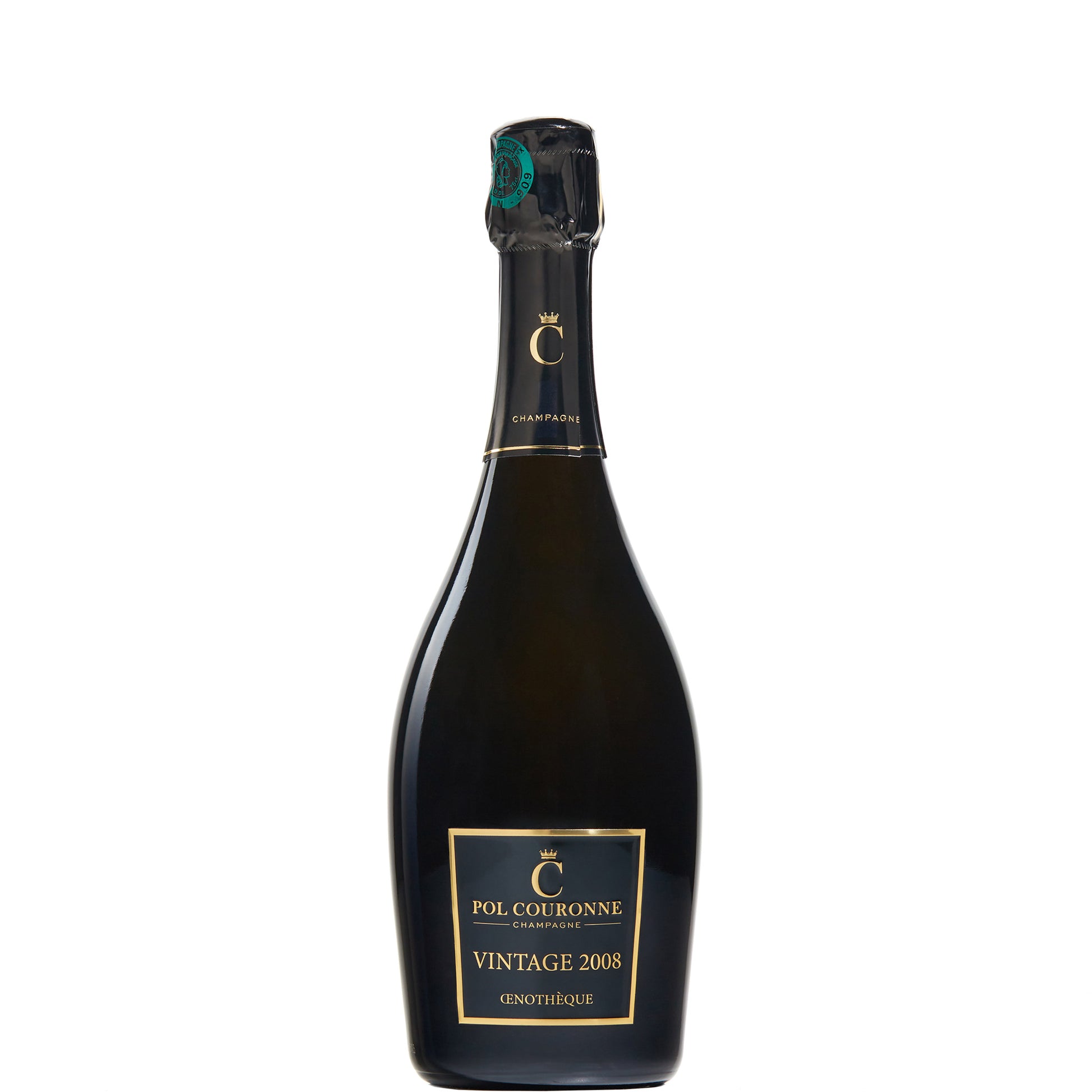
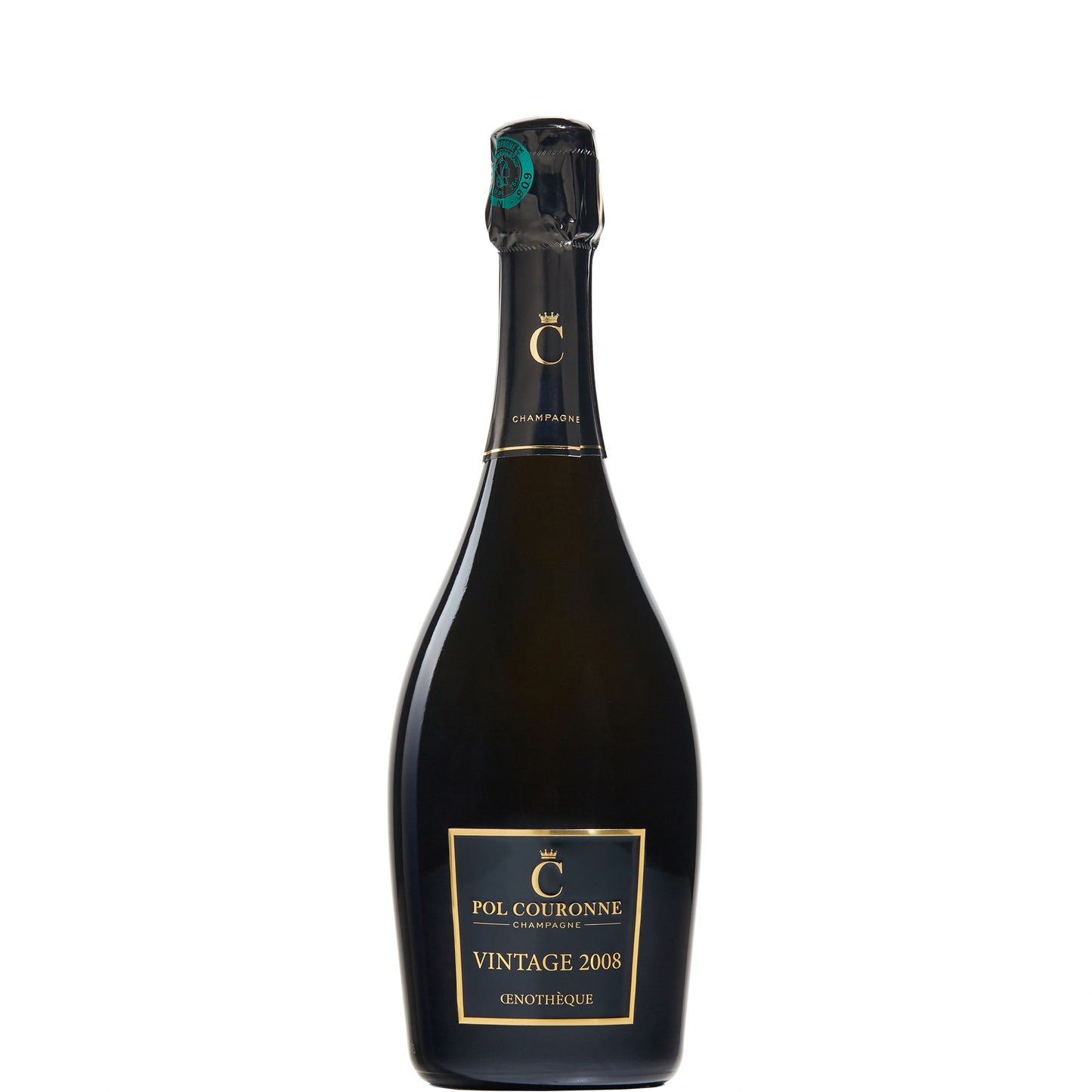
Pol Couronne, Oenothèque Millésime, 2008
Pol Couronne, Oenothèque Millésime, 2008
- 75cl
- 12%
- White Sparkling
- Chardonnay, Pinot Noir
Couldn't load pickup availability

Optimal drinking window: Now - 2040
About Pol Couronne, Oenothèque Millésime, 2008
We’ve worked with Pol Couronne for years now and the quality emerging from the house is nothing short of exceptional.
For 2008 Pol Couronne Oènotheque Millésime the care and attention are only ratcheted up. The 2008 is a blend of 50% Chardonnay and 50% Pinot Noir and really makes the most of the faultless weather conditions in this year. Picked only from Grand Cru vineyards in Bouzy and Ambonnay for the Pinot Noir and Avize for the Chardonnay, and held onto as part of the House library stocks, it was aged on the lees for an incredible 15 years and was aged in 10% oak to ramp up the depth even further. We are privileged to have access from what may would consider the single finest year in Champagne, the house themselves are sold out completely.
Whilst Pol has not been put in front of critics you’ve got to go back to 1979 to find a vintage which outscores it in Vinous (by half a point. Antonio Galloni gives the 2008 vintage overall 97+ and says “the 2008 Champagnes that have been released so far capture all the potential I sensed when I first tasted the young vins clairs right after harvest. The 2008’s are racy, energetic and tense…the finest 2008 Champagnes are viscerally thrilling, chiselled wines that will soon be recognized as modern-day icons”.
Looking at boxes to tick:
✓ A rare, limited edition, specially lees-matured vintage cuvée,
✓ from a superbly artisan but under the radar grower,
✓ from the greatest vintage for Champagne since 1979,
✓ for a shade over £80 a bottle on your table
"The 2008 Pol Couronne Oenotheque Millesime is pure elegance. It has all the wonderful characteristics of the Pol Coronne house style revved up 10-fold. Honeyed in colour, with the finest bubbles, gives way to an exhilarating nutty and toasty nose of Macademia, and freshly baked surdough, with ginger syrup, fresh fig, and salted country butter. Rich and full with a savoury, saline aspect, notes of cereal and malt, manuka honey and chalk all balanced by the freshness of Mirabelle and golden delicious apples, the finish is long, leesy and very more-ish. Why contribute to a Grand Marque’s marketing budget when this beauty is available – and every penny is paying for what’s in the bottle and not on the label?"
Our note
At 18 years from harvest and with 15 of those spent on the lees, the 2008 is only now entering what we would consider its most expressive phase. The primary citrus and stone fruit of the base wine has long since integrated into the richer, more complex secondary register of malt, nut, and baked dough. Over the next five to eight years we expect that chalk-driven tension to continue underpinning the wine's development, keeping it fresh and purposeful. The plateau of peak drinking is likely to stretch comfortably until 2033 or beyond for bottles stored well.
Tasting Notes
AppearanceDeep golden amber with a honeyed warmth and the finest, most persistent stream of bubbles you could hope for.
NoseFifteen years on the lees has done extraordinary things here: toasted macadamia, freshly baked sourdough, and ginger syrup open first, followed by salted butter and a lift of fresh fig. There is a chalk-dusted quality underneath that keeps the whole thing taut rather than opulent.
PalateRich and full without ever feeling heavy — cereal, malt, and manuka honey weave through a saline, almost oyster-shell backbone. The Avize Chardonnay asserts itself in the finish with Mirabelle plum and golden apple cutting clean through the richness.
FinishLong, leesy, and deeply satisfying, with chalk and a faint iodine thread that lingers well beyond the last sip.
Overall impressionA Champagne that makes the case, quietly and convincingly, that 2008 is one of the greatest vintages this region has produced in living memory.
Food Pairings
In Champagne, a wine like this would be the centrepiece rather than the aperitif. Locals would pair an aged blanc de noirs or prestige cuvée with a whole roasted bresse chicken finished with cream and morel mushrooms, or with a slab of well-aged Comté whose nutty, saline character mirrors what the lees ageing has done to the wine. Langoustines with beurre blanc are a classic match for this level of richness and precision. On a more indulgent evening, a plate of aged jambon de Reims alongside a wedge of Chaource cheese would do the wine no harm at all.
We think this wine would go well with
Serve at around 10-12°C — cold enough to keep the mousse lively, but warm enough to let the complexity unfold in the glass. There is no need to decant, but do pour into a large white wine glass rather than a flute; after 15 years on the lees this wine has earned the bowl space to breathe and open up. Give it 20 minutes in the glass before you start paying proper attention to it.
The Pinot Noir component is drawn from Grand Cru villages Bouzy and Ambonnay on the Montagne de Reims, where south-facing chalk slopes produce richly structured, full-bodied base wines with real depth. The Chardonnay comes from Avize on the Côte des Blancs, widely regarded as one of Champagne's most prized Grand Cru villages, producing wines of extraordinary precision and tension. The underlying chalk geology runs through both sites, lending the wine its characteristic saline minerality and the kind of focused acidity that makes long lees ageing not just possible but transformative. 2008 was the final piece of the puzzle: a cool, slow-ripening growing season that concentrated flavour and locked in natural freshness in a way that warmer vintages simply cannot replicate.
Champagne is the only French appellation where the permitted method of secondary fermentation in bottle is not merely allowed but definitional. Grand Cru status applies to 17 villages in the region, all scoring 100% on the historic Echelle des Crus, and fruit from these sites commands the highest prices and greatest critical regard. Vintage Champagne must be made exclusively from grapes harvested in the stated year and must be aged on the lees for a minimum of three years, though serious producers age far longer. The Oenotheque designation signals extended cellar ageing in the house library, typically a decade or more beyond disgorgement, and represents a producer's most considered statement of what their terroir and a given vintage can achieve.
The 2008 vintage in Champagne arrived as something of a surprise package after a growing season that kept producers guessing until the very end. A cool, wet summer had many fearing the worst, but September delivered the kind of weather that makes vignerons believe in providence again. The late-season sunshine and dry conditions allowed for a patient harvest that rewarded those who waited, producing grapes with the sort of pristine acidity that Champagne practically demands.
What emerged from this roller-coaster year was a vintage of remarkable freshness and tension, particularly from Chardonnay, which seemed to thrive in the challenging conditions. The wines show a mineral backbone that we find absolutely thrilling, with a purity of fruit that makes them feel almost weightless on the palate. These bottles are drinking superbly now, having developed the toasty, honeyed depth that comes with proper bottle age, yet they retain enough verve to cellar happily until 2035. We think 2008 represents one of those vintages that reminds you why Champagne can be so utterly compelling when everything clicks.
FAQs
What does this Champagne taste like?
Rich and complex, with toasted macadamia, sourdough, manuka honey, and a saline chalk backbone. The Avize Chardonnay brings a precise, apple-and-Mirabelle freshness that stops it ever feeling heavy. The finish is long, leesy, and deeply satisfying.
Is the 2008 vintage really that special?
In short, yes. Antonio Galloni at Vinous gives the 2008 Champagne vintage 97+ and describes the finest examples as viscerally thrilling and chiselled. You would have to go back to 1979 to find a vintage that scores higher. The cool growing season concentrated flavour and locked in acidity in a way that makes extended lees ageing particularly transformative.
What food should I serve with this?
Think richness matched with richness: roast chicken with morel cream sauce, aged Comté, langoustines with beurre blanc, or simply a plate of very good jambon alongside a wedge of Chaource. This is not an aperitif Champagne — it deserves a seat at the table.
How does this compare to a well-known Grand Marque at this price point?
Frankly, it does not compare — it outperforms. The Grand Cru sourcing, 15 years on the lees, and partial oak ageing represent a level of investment you rarely see at anywhere near this price from a recognised house. Every penny is in the bottle, not the label.
Should I buy more than one bottle?
The house is completely sold out, so what is available through Honest Grapes is drawn from library stock that cannot be replenished. If you want bottles to drink now and bottles to cellar, buy accordingly — this is not a wine that will come back around.

Explore related wines


What are you looking for tonight? Tell me the occasion, a grape, a region — or just try a suggestion below.
Your recommendations will appear here.
-
-
Speak to one of our Wine Gurus
Speak to a Wine GuruWith years of experience, our team can help you with all your wine buying and selling needs