
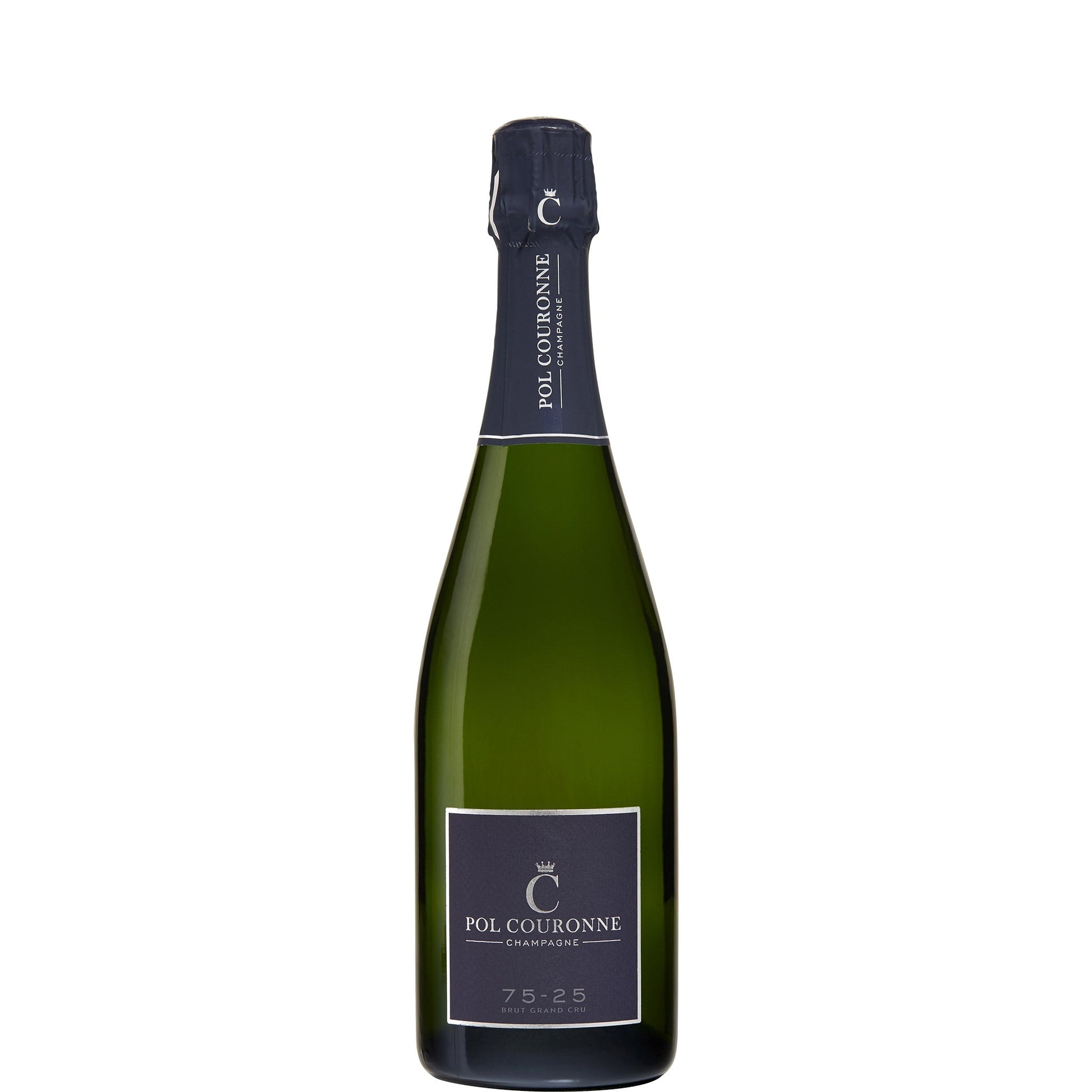
Pol Couronne, 75-25 Grand Cru, Nv
Pol Couronne, 75-25 Grand Cru, Nv
- 75cl
- 12%
- White Sparkling
- Chardonnay, Pinot Meunier, Pinot Noir
Couldn't load pickup availability

Optimal drinking window: 2026 - 2032
About Pol Couronne, 75-25 Grand Cru, Nv
The Grand Cru "75-25" is aptly named. It is made with 75% Pinot Noir from the Grand Cru vineyards Bouzy and Ambonnay, which give the cuvée structure, fruitiness and freshness.
The addition of 25% Chardonnay from the Grand Cru vineyards of Avize, the heart of the Côte des Blancs, softens the emphasis on Pinot Noir, which gives freshness to this cuvée. This subtle combination makes it possible to offer a high quality champagne that is perfectly balanced.
As a non-vintage release, the 75-25 is built to be drunk now and it's at its most expressive in the near term. The primary red fruit and fresh pastry character are front and centre at the moment, and that's exactly where you want them. Over two to three years it may develop a little more honeyed, toasty complexity, but this isn't a wine designed for a long cellar stay. Drink it by 2030 and you'll catch it at its best; beyond that the freshness that makes it so appealing will start to soften and fade.
Tasting Notes
AppearancePale gold with a fine, persistent bead and good mousse at the rim.
NoseBrioche and fresh-baked pastry sit alongside red cherry and strawberry from the Pinot Noir fruit. A thread of white peach and chalk dust from the Avize component keeps things clean and precise rather than rich.
PalateThe Pinot Noir dominance is clear — there's real structure and breadth here, with red berry fruit and a touch of cream. The Chardonnay does its work quietly, pulling the acidity taut and giving the wine a freshness that makes it feel lively rather than broad.
FinishClean and reasonably long, with a chalky mineral quality and a flicker of citrus pith at the close.
Overall impressionA well-balanced Grand Cru Champagne that wears its Pinot Noir heart openly and earns it.
Food Pairings
In Champagne, this style of Pinot Noir-dominant cuvée would traditionally be paired with jambon de Reims — the pressed, lightly spiced ham that is practically the region's signature charcuterie. Local cooks also reach for andouillette, the polarising tripe sausage that needs the wine's acidity to cut through it, or a simple plateau de fromages anchored by Chaource, the creamy local cheese that flatters Champagne's bubbles and fruit in equal measure. For something more celebratory, a roast poulet de Bresse works brilliantly — the bird's richness meeting the wine's structure without either overpowering the other.
We think this wine would go well with
Serve at 8-10°C — cold enough to keep the bubbles lively, but not so cold that the Pinot Noir fruit disappears. No decanting needed; this is a wine that wants to come straight from the fridge to the glass. A tulip-shaped Champagne glass rather than a flute will give the red berry and brioche character room to open up properly.
Bouzy and Ambonnay are two of the Montagne de Reims's most prized Grand Cru villages, planted predominantly to Pinot Noir on chalk-rich soils that deliver structure, depth, and that distinctive red-fruit concentration the region is known for. Avize, on the Côte des Blancs, sits on pure chalk and produces Chardonnay of remarkable tension and minerality — chalk giving wines that flinty, almost electric quality that lifts and lengthens a blend. The contrast between the two terroirs is precisely what makes this combination work: richness from the Montagne, precision from the Côte.
Champagne is the most tightly regulated sparkling wine appellation in the world, with strict rules on grape varieties, yields, pressing, and minimum ageing. Grand Cru status in Champagne applies to 17 villages rated at 100% on the old échelle des crus scale, meaning the fruit commands the highest prices and is held to the highest standards. Non-vintage Champagne must age for a minimum of 15 months on its lees, though many producers exceed this. Champagne's northerly climate, combined with deep chalk subsoils, is what gives the region its hallmark acidity and the capacity to age — qualities no other sparkling wine region has quite managed to replicate.
FAQs
What does the 75-25 in the name mean?
It refers directly to the blend: 75% Pinot Noir from the Grand Cru villages of Bouzy and Ambonnay, and 25% Chardonnay from the Grand Cru village of Avize on the Côte des Blancs. Pol Couronne have put the recipe on the label, which we think is admirable.
What does this Champagne taste like?
Think red cherry, fresh strawberry, and brioche from the Pinot Noir, with Avize Chardonnay adding a chalky precision and citrus freshness. It's structured and satisfying without being heavy.
When should I drink it?
Now, happily. This is a non-vintage Champagne built for current drinking, and it's at its peak. We'd suggest enjoying it before 2030 to catch it at its liveliest.
What food should I serve with it?
The Pinot Noir weight means it can handle more than the average aperitif Champagne. Try it with charcuterie, a creamy soft cheese like Chaource, roast chicken, or even a mushroom risotto.
How should I serve it?
Straight from the fridge at around 8-10°C, in a tulip glass rather than a flute so the fruit has room to breathe. No decanting required.
Is this worth buying as a gift?
Very much so. Grand Cru fruit, a clear and honest label, and real Pinot Noir character make this a step above most non-vintage Champagne at the price. It's a bottle that impresses without requiring an explanation.

Explore related wines


What are you looking for tonight? Tell me the occasion, a grape, a region — or just try a suggestion below.
Your recommendations will appear here.
-
-
Speak to one of our Wine Gurus
Speak to a Wine GuruWith years of experience, our team can help you with all your wine buying and selling needs