
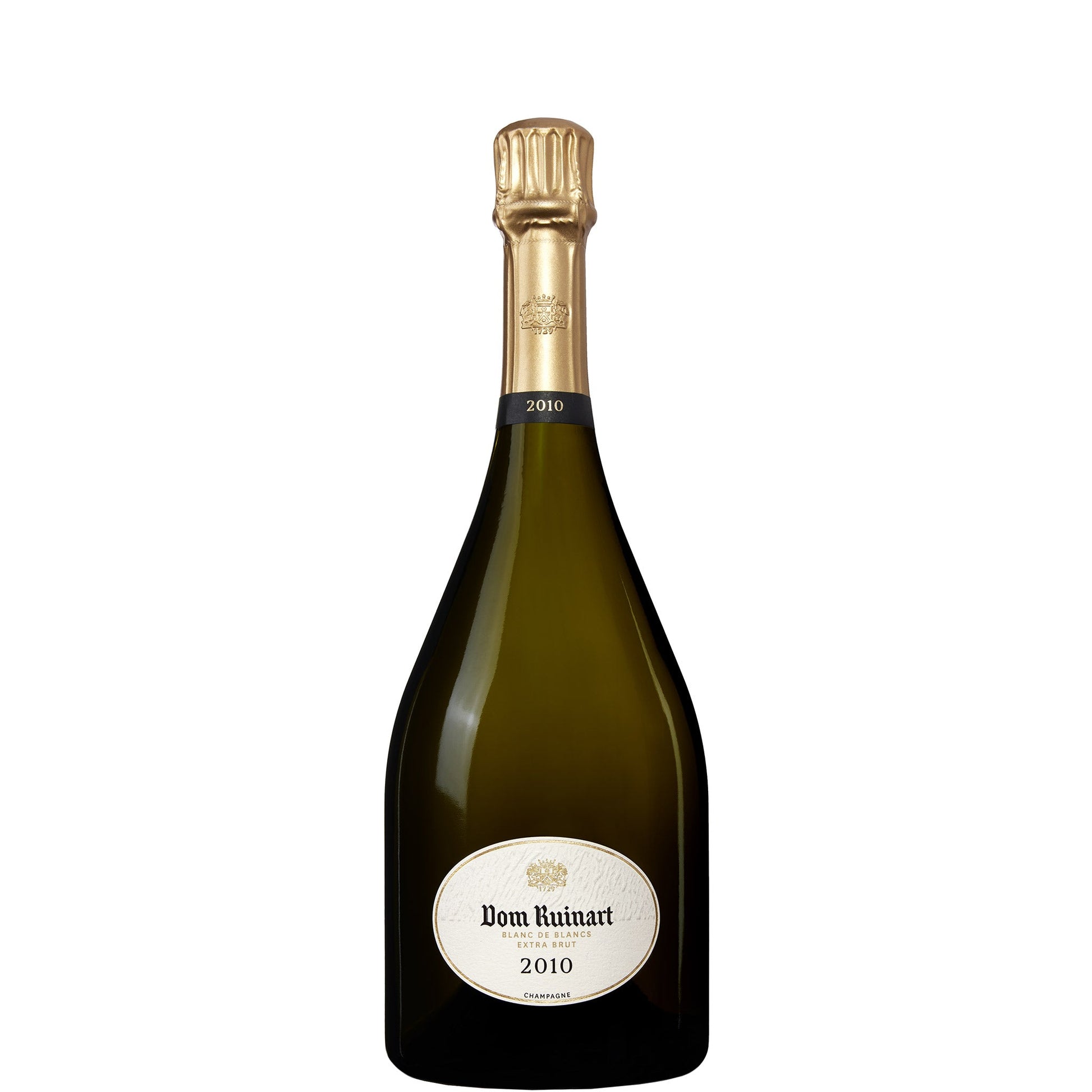
Dom Ruinart, Blanc de Blancs Extra Brut, 2010
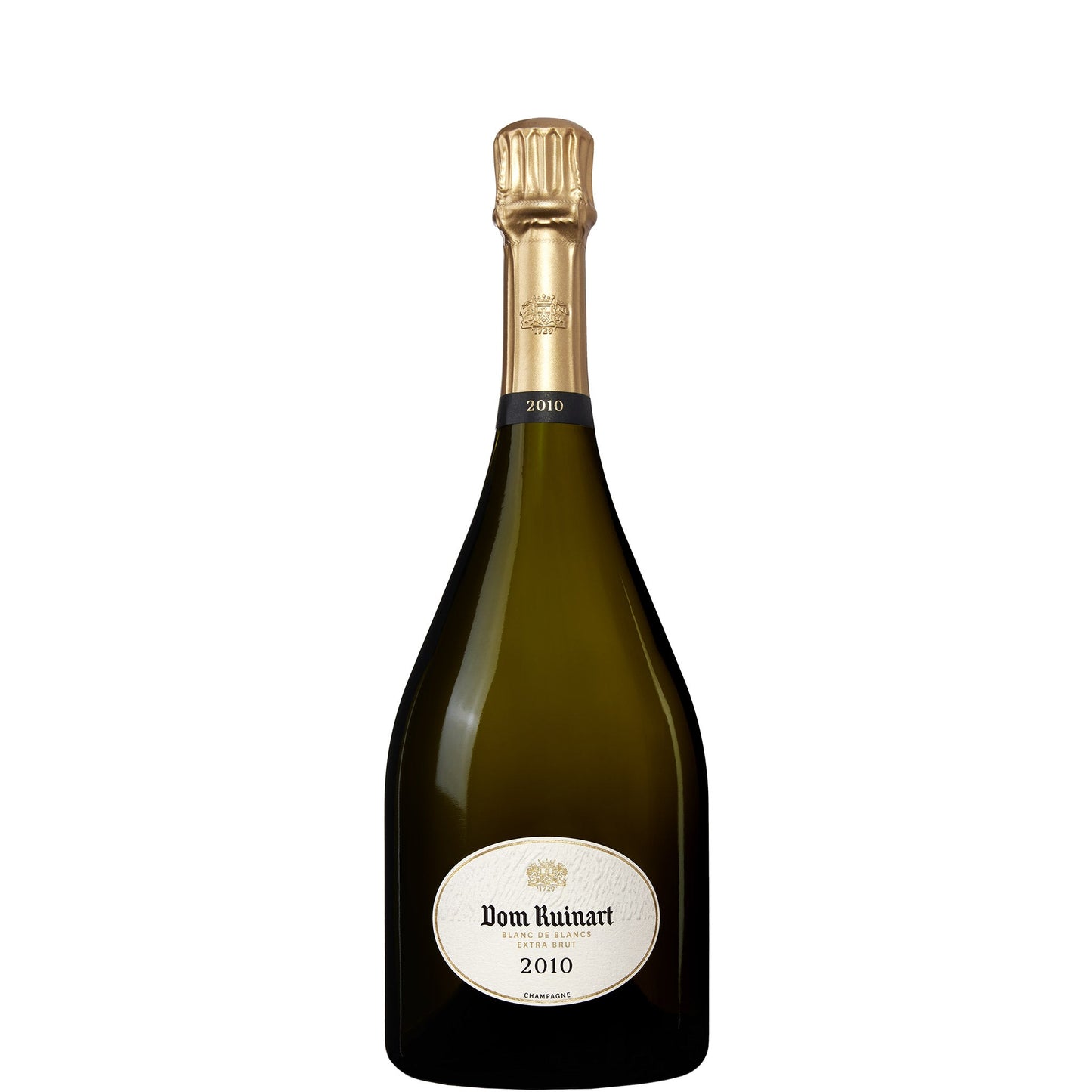
Dom Ruinart, Blanc de Blancs Extra Brut, 2010
- 75cl
- 12.5%
- White Sparkling
- Chardonnay
Couldn't load pickup availability

Optimal drinking window: Now - 2030
About Dom Ruinart, Blanc de Blancs Extra Brut, 2010
The very first champagne house, Ruinart, was founded 290 years ago. With a rich and complex history, the Maison has never stopped developing and promoting its own special art of living.
Ruinart's Blanc de Blancs Extra Brut is 100% Chardonnay from various years, 20 to 25% of which are reserve wines from the 2 previous years. A large majority of Premiers Crus from the Côte des Blancs and Montagne de Reims vineyards for aromatic refinement, supplemented by Sézannais wines known to provide maturity. Finally, several wines from the north of the Vesle valley gives it a light, fresh touch.
The 2010 Blanc de Blancs is a perfect champagne for aperitifs, particularly in spring and summer. It is an excellent complement to seafood and shellfish and would be lovely with a sea bass or bream tartare.
This 2010 is currently showing beautifully, having developed the smoky, flinty complexity that marks the transition from primary fruit to secondary character. The wine entered its drinking window around 2018-2019 and is now in its prime phase, where the youthful citrus has integrated with the toasted, nutty notes from extended lees contact. It will continue to develop greater richness and honeyed complexity over the next 5-7 years, reaching full maturity by 2030. After 2035, the fruit may begin to fade, though the mineral structure should ensure graceful ageing for several years beyond.
What the critics say:
"The first vintage since the 1960s to see tirage under natural cork in lieu of crown caps, the 2010 Dom Ruinart Blanc de Blancs was disgorged in November 2021. It's showing nicely, over-performing for the vintage, displaying aromas of yellow orchard fruit, toasted nuts, spices, smoke, dried white flowers and iodine. Medium to full-bodied, pillowy and layered, with impressive concentration and chalky structure, it concludes with a long, saline finish."
"Almost like a white, with a smoky and flinty nose. Dried lemons, cedar, smoked almonds, spiced apples, hazelnuts, salted butter and toast. Tangy and sharp, yet creamy and buttery, too, with fine bubbles. Hazelnuts at the end. Disgorged in February 2021. Drink or hold."
Tasting Notes
AppearancePale gold with persistent, fine bubbles forming elegant chains to the surface.
NoseThe first impression is distinctly smoky and flinty, almost Chablis-like in its mineral precision. Yellow orchard fruit emerges alongside toasted hazelnuts and spiced apples, with dried white flowers and a subtle iodine complexity that speaks to the wine's maritime influences. There's an appealing cedar note that adds sophistication without overwhelming the fruit.
PalateMedium to full-bodied with a fascinating duality of sharp, tangy acidity and creamy, buttery texture. The mousse is refined and pillowy, carrying flavours of dried lemons, salted butter, and toasted almonds. The chalky structure provides backbone without hardness, creating impressive concentration and length. Hazelnuts return on the mid-palate, adding richness and complexity.
FinishLong and distinctly saline, with mineral persistence that echoes the chalk soils and a final flourish of toasted nuts.
Overall impressionA champagne that over-performs its vintage, showing remarkable depth and the kind of mineral complexity that only comes with proper bottle age.
Food Pairings
In Champagne, this style of aged Blanc de Blancs would traditionally accompany the region's exceptional seafood, particularly Belon oysters from nearby Brittany or local river trout prepared simply with butter and herbs. The Champenois would also pair it with their famous andouillette sausages from Troyes, the richness balancing the wine's acidity and mineral precision. Chaource cheese, the region's creamy cow's milk cheese, makes another classic pairing, as does the local specialty of escargots de Champagne prepared with garlic and parsley butter.
We think this wine would go well with
Serve well-chilled at 6-8°C in tulip-shaped champagne flutes to concentrate the aromatics and showcase the fine mousse. No decanting required, but do open the bottle gently and allow it to breathe in the glass for a few minutes to fully appreciate the smoky complexity. Store bottles on their side in a cool, dark place, and avoid temperature fluctuations which can disturb the delicate bubble structure.
The grapes come primarily from premier cru vineyards on the Côte des Blancs and Montagne de Reims, where Chardonnay thrives on the region's distinctive chalk soils. These porous, limestone-rich soils provide excellent drainage whilst retaining sufficient moisture during dry spells, and their mineral composition directly influences the wine's chalky structure and saline finish. The cool climate ensures slow ripening, preserving the acidity essential for both the secondary fermentation and the wine's remarkable ageing potential.
Champagne AOC represents the pinnacle of sparkling wine production, with strict regulations governing everything from grape varieties to pressing yields and riddling techniques. The region's unique combination of continental climate, chalk soils, and centuries of refined technique creates wines of unmatched complexity and finesse. Within Champagne, Blanc de Blancs represents the purest expression of Chardonnay, typically offering greater elegance and longevity than blended cuvées, with the Côte des Blancs villages of Cramant, Avize, and Le Mesnil-sur-Oger considered the spiritual home of this style.
The 2010 vintage in Champagne was shaped by a season of extremes that ultimately delivered exceptional fruit. A harsh winter gave way to a warm, dry spring that encouraged early flowering, followed by a summer punctuated by both scorching heat and refreshing rainfall at precisely the right moments. The harvest began in early September under ideal conditions, with growers bringing in healthy grapes that combined the ripeness of a warm year with the crucial acidity that separates great Champagne from merely good wine.
What emerged was a vintage of remarkable concentration and freshness, producing Champagnes that marry power with finesse in ways that remind us why certain years become legendary. The Chardonnay shows particular brilliance, developing rich fruit character whilst retaining that mineral backbone that makes grand Champagne so compelling, while Pinot Noir delivered depth without heaviness. These wines are drinking superbly now, offering immediate pleasure for those who can't resist, but the finest examples will reward patience until 2028 and beyond.
FAQs
What does this champagne taste like?
Distinctly mineral and smoky, with yellow orchard fruit, toasted hazelnuts, and a creamy yet sharp texture. The finish is long and saline with chalky precision.
When should I drink this champagne?
It's drinking beautifully now and will continue to reward patience until the mid-2030s, developing greater honeyed complexity over time.
What food pairs well with this champagne?
Excellent with oysters, sea bass tartare, or any delicate seafood. The mineral structure also complements soft cheeses like Chaource or Brie de Meaux.
How should I serve this champagne?
Serve well-chilled at 6-8°C in tulip-shaped flutes. Open gently and allow a few minutes in the glass to appreciate the complex aromatics.
Is this worth cellaring?
While drinking superbly now, it will reward careful cellaring for another decade, developing richer, more honeyed complexity whilst maintaining its mineral backbone.
What makes this different from other champagnes?
As a pure Chardonnay Blanc de Blancs from premier cru vineyards, it offers greater elegance and longevity than blended champagnes, with distinctive chalky minerality from the Côte des Blancs.

OUR GROWERS
Maison Ruinart
Explore related wines


What are you looking for tonight? Tell me the occasion, a grape, a region — or just try a suggestion below.
Your recommendations will appear here.
-
-
Speak to one of our Wine Gurus
Speak to a Wine GuruWith years of experience, our team can help you with all your wine buying and selling needs