

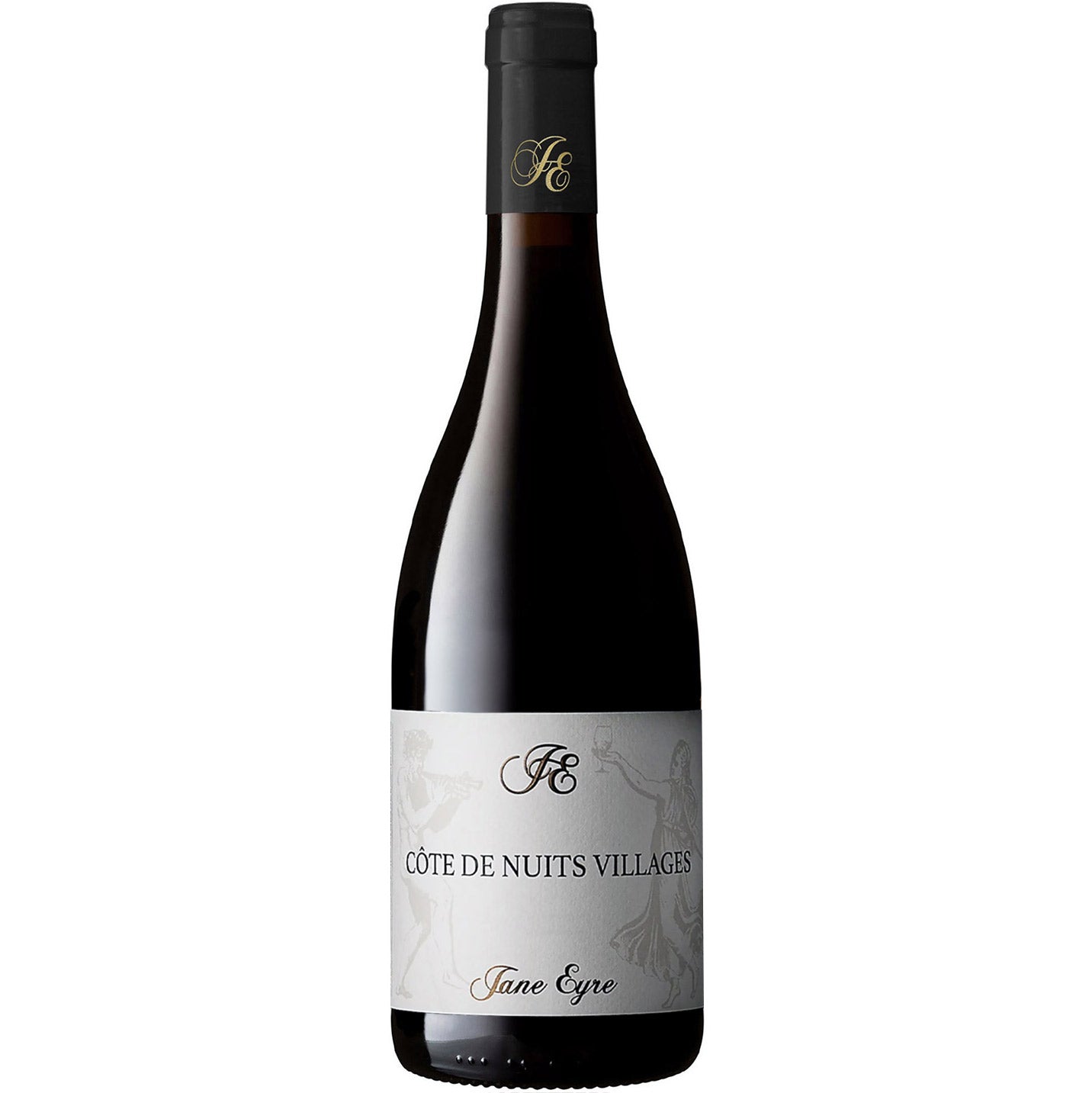
Côte de Nuits-Villages, Jane Eyre, 2024 - Magnum
Côte de Nuits-Villages, Jane Eyre, 2024 - Magnum
- 150cl
- 13.5%
- Red Still
- Pinot Noir
Couldn't load pickup availability

Optimal drinking window: 2027 - 2036
Côte de Nuits-Villages sits quietly at the edges of one of the world's most storied wine corridors, bookending the Côte de Nuits between Fixin in the north and Corgoloin in the south. It is Burgundy without the grand cru price tag, and in the right hands it delivers everything you want from the region: Pinot Noir that is precise, perfumed, and genuinely alive. Jane Eyre's 2024 is exactly that kind of wine.
"From old vines in Corgoloin and Comblanchien. Traditionally sees more whole bunch. Succulent dark fruit without excess ripeness, balanced and reassuringly complete. A wine Jane has “always made well”, and it shows."
Stewart Pryce, Honest Grapes Wine Club Manager
The 2024 vintage in Burgundy was a complicated one, shaped by a wet spring and a late-season rescue by warm September sun. Producers who were attentive in the vineyard made wines of real freshness and charm rather than weight.
In 2026, the 2024 is still very much in its primary phase — the fruit is bright and direct, the tannins fresh rather than resolved. By 2027-2028 we would expect the fruit to begin integrating with the earthy, mineral character, producing a more complex and satisfying mid-palate. The magnum format will slow this development slightly, which is a good thing. Peak drinking is likely somewhere between 2028 and 2032, when secondary notes of dried rose, game, and forest floor will have fully emerged.
What the critics say:
"Just racked from barrel. 30% whole bunches as the Côte de Nuits grapes were a little riper. A lively crimson ruby in colour. More cherries than berry fruit, a little bit of pepper from the whole bunches, then the fruit returns in an extended finish. Drink from 2028-2031. Tasted Oct 2025. *4/5*"
Tasting Notes
AppearanceBright, translucent ruby with a youthful pink-tinged rim — the colour of a wine that hasn't had time to think about itself yet.
NoseFresh red cherry and wild strawberry come first, with a flicker of violet and dried rose petal. Underneath, there's a cool earthy note — damp stone, a little mushroom — that grounds the whole thing and tells you this is from the Côte de Nuits and nowhere else.
PalateSilky rather than weighty, with fine-grained tannins that frame the fruit without muscling in. Cranberry and sour cherry carry the mid-palate, sharpened by a lively acidity that keeps everything alert. The magnum format has already softened the edges slightly, and there's a generosity here that feels earned rather than constructed.
FinishClean and mineral, with a faint savoury echo and enough length to make you reach for another sip.
Overall impressionCôte de Nuits-Villages doing what it does best: honest, precise Burgundy that doesn't try to be something grander than it is.
Food Pairings
In the villages of the Côte de Nuits, this kind of wine ends up on the table with coq au vin — slowly braised in red Burgundy with lardons, mushrooms, and a handful of pearl onions. Oeufs en meurette, poached eggs in a rich red wine sauce, is another local classic that plays beautifully against Pinot Noir at this weight. In summer, a platter of jambon persillé, the jellied ham terrine from Dijon, is the kind of uncomplicated pairing the Burgundians do instinctively. A cheese course built around Époisses or Langres — pungent, washed-rind, unapologetic — is the traditional way to end a Burgundian dinner and suits the earthy, mineral character of this wine very well.
We think this wine would go well with
Serve at around 15-16°C — cool enough to keep the acidity lively, warm enough to let the fruit open up. In a magnum, the wine will need 30-45 minutes in a decanter to breathe properly and shed any initial reticence from bottle. A larger Burgundy-style bowl is ideal, giving the aromatics room to unfold without dispersing them too quickly.
Côte de Nuits-Villages vineyards sit on limestone and clay soils at the northern tip around Fixin and Brochon, and the southern end near Corgoloin and Comblanchien. The latter areas are notable for their hard limestone — the same stone quarried for Parisian buildings — which contributes the stony, mineral backbone that separates good Côte de Nuits-Villages from mere village-level wine. Continental climate means warm summers and cold winters, with the altitude and aspect of individual plots doing much of the work in concentrating flavour without losing acidity.
Côte de Nuits-Villages is the outlier appellation of the Côte de Nuits, covering vineyards at its northern and southern extremities rather than the celebrated central strip of Gevrey, Chambolle, and Vosne. It produces red wine almost exclusively from Pinot Noir, with a tiny amount of white permitted. The rules mirror those of the broader Burgundy AOC hierarchy, but the soils and exposures here differ meaningfully from the grand cru heartland — you get more limestone influence, cooler pockets, and a style that leans towards freshness over weight. Think of it as the honest, unglamorous cousin of Gevrey-Chambolle: less famous, but capable of real pleasure at a fraction of the price.
The 2024 growing season in Burgundy was, frankly, a test of nerve. A wet spring brought significant mildew pressure, and vignerons who stayed sharp in the vineyard — working fast, keeping canopies open, reducing yields where necessary — came out the other side with something worth talking about. Summer brought warmer, drier conditions that helped the fruit recover composure, and harvest arrived broadly on the later side, with growers picking carefully to find phenolic ripeness without sacrificing freshness. Quantity was down across much of the Côte, which concentrates minds as much as it concentrates wine.
What emerged is a vintage that rewards those who put the work in. The Pinots we have tasted carry real precision and translucency — not because they are light, but because the acidity is lively and the fruit unforced. Chardonnays from the Côte de Beaune look particularly promising: taut, mineral, with genuine length. This is not a vintage to panic-open. Most village and premier cru reds want three to five years at minimum, with the better appellations drinking well until 2035 and beyond. The whites are more approachable now, though the best will reward patience too.
FAQs
What does this wine taste like?
Fresh red cherry, wild strawberry, and a cool earthy note — damp stone and forest floor — with silky tannins and a clean mineral finish. It is precise and lively rather than rich or heavy, very much in the classic Côte de Nuits style.
When is the best time to drink this wine?
It is approachable now but we would suggest giving it until 2027 to settle properly. In the magnum format it will develop more slowly than a standard bottle, and the sweet spot is likely 2028 to 2031.
Is the magnum format worth it for this wine?
Yes, genuinely. Magnums age more slowly and evenly than standard bottles, which suits a wine like this well — it gives the fruit time to integrate and the secondary complexity time to develop without the wine drying out. It is also a very good dinner party format for Burgundy at this level.
What food should I serve with this?
Classic Burgundian fare works best: coq au vin, oeufs en meurette, jambon persillé, or a cheese course built around Époisses or a good Comté. The wine is light enough not to overwhelm, but has enough character to handle earthy, rich flavours.
How should I serve it?
Around 15-16°C, in a generous Burgundy bowl. Decant for 30-45 minutes — the magnum benefits from a little air to open up, and it will reward the patience.
How does Côte de Nuits-Villages compare to other Burgundy appellations?
It sits below village-level appellations like Gevrey-Chambolle-Musigny in the hierarchy, covering the northern and southern fringes of the Côte de Nuits rather than the celebrated central strip. The wines tend to be fresher and more mineral than some of the richer village reds, and they represent some of the best value in the region — serious Pinot Noir without the grand cru price tag.
Explore related wines


What are you looking for tonight? Tell me the occasion, a grape, a region — or just try a suggestion below.
Your recommendations will appear here.
-
-
Speak to one of our Wine Gurus
Speak to a Wine GuruWith years of experience, our team can help you with all your wine buying and selling needs