

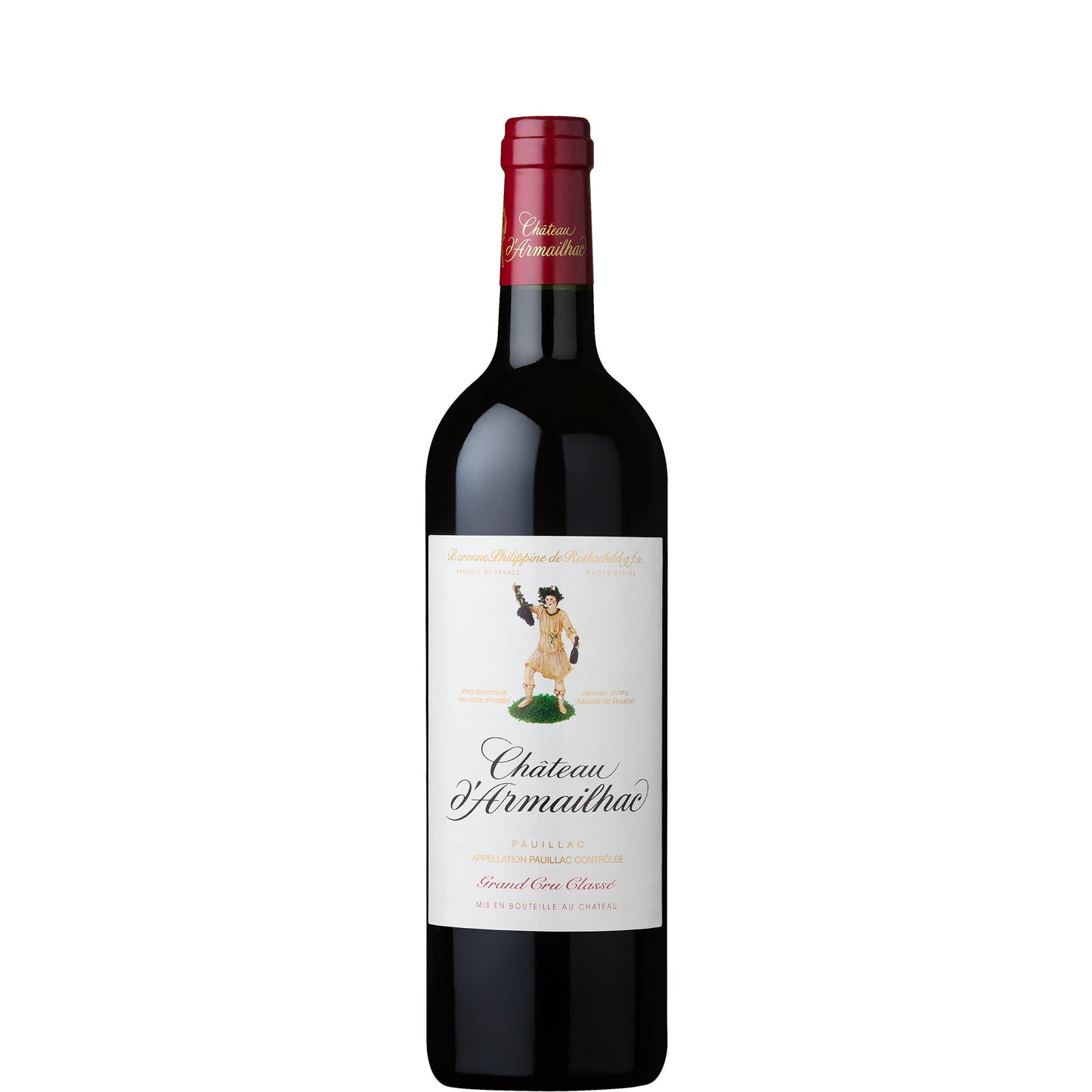
Château d'Armailhac, 2017
Château d'Armailhac, 2017
- 75cl
- 13.5%
- Red Still
- Cabernet Sauvignon, Merlot, Cabernet Franc, Petit Verdot
Couldn't load pickup availability

Optimal drinking window: Now - 2040
A historic estate in Pauillac, Château d’Armailhac creates wines of elegance and finesse, reflecting the estate's illustrious past and prestigious terroir.
The 2017 vintage in Bordeaux was challenging due to weather conditions, but the wines from top estates like Château d'Armailhac still show good structure, balance, and aging potential.
Currently displaying vibrant primary fruit with tannins still assertive, this wine will begin integrating beautifully from 2028 onwards as the Cabernet Sauvignon softens and the blend harmonises. Secondary complexity - leather, tobacco, and cedar - will emerge around 2032, adding layers whilst the fruit remains fresh and defined. The wine should reach its plateau between 2035-2040, showing the full spectrum from primary fruit through secondary development. Gradual decline may begin after 2042, though the wine's excellent structure suggests it will remain pleasurable well beyond that date for those who appreciate mature Bordeaux character.
What the critics say:
"Opulent and powerful for d’Armailhac with blackcurrants, blackberries and black olives. Full-bodied, tannic and extremely muscular. Very well done indeed."
"A blend of 68% Cabernet Sauvignon, 22% Merlot, 7% Cabernet Franc, and 3% Petit Verdot, the 2017 d’Armailhac is deep garnet-purple in color. It shoots from the glass with vibrant notions of fresh blackcurrants, black cherries, and black raspberries, plus hints of wild sage, pencil lead, cedar chest, and lavender. Light to medium-bodied, the palate is tightly knit and refreshing, featuring fine-grained tannins and delicate red and black fruit layers, finishing with a mineral lift."
"The 2017 Château d'Armailhac is an undeniable success in the vintage. Based on a rough blend of 68% Cabernet Sauvignon, 22% Merlot and the rest Cabernet Franc and Petit Verdot that will see 35% new French oak, this medium to full-bodied, textured, shockingly opulent 2017 offers of terrific notes of black cherries, blackberries, spice box, and earth. With its impressive depth and density, it should drink nicely in its youth yet also cruise in the cellar."
Tasting Notes
AppearanceDeep garnet-purple with a vibrant, youthful rim suggesting years ahead.
NoseShoots from the glass with fresh blackcurrants and black cherries, lifted by wild sage and lavender. Underneath, classic Left Bank signatures of pencil lead and cedar chest add complexity without overwhelming the fruit. The aromatics suggest both immediate appeal and long-term development.
PalateTightly knit and refreshing despite its muscular frame, with fine-grained tannins that speak to careful extraction. The fruit layers show delicate precision - red and black berries rather than jammy concentration. Black olives add a savoury dimension that lifts the whole wine, whilst the texture remains surprisingly refined for such a powerful vintage expression.
FinishLong and mineral-driven, with that distinctive graphite lift that marks great Pauillac.
Overall impressionAn opulent d'Armailhac that hasn't sacrificed its essential elegance.
Food Pairings
In the Médoc, this would traditionally accompany the region's famous agneau de Pauillac - salt marsh lamb whose gamey richness perfectly complements the wine's structured tannins and savoury depth. Local bistros pair similar wines with entrecôte à la bordelaise, the beef cooked in red wine with shallots and bone marrow, creating a harmonious marriage of local terroir. The wine's black olive character also suits the region's preference for dishes featuring cèpes and other wild mushrooms, often served alongside game birds during the autumn hunting season. Cheese courses typically feature aged Roquefort or local chèvre, whose creamy textures soften the wine's firm structure whilst highlighting its mineral backbone.
We think this wine would go well with
Serve at 17-18°C to allow the fruit and mineral complexity to express fully without overwhelming tannins. Decant for at least 90 minutes - this wine benefits from extended aeration to soften its muscular structure and reveal its underlying elegance. Use large Bordeaux glasses to concentrate the aromatics whilst providing sufficient surface area for proper development. Given its current tightness, don't rush the service - allow the wine to open in the glass over the course of an evening.
The 70-hectare vineyard sits on the classic Pauillac gravel beds that define the Left Bank, with deep Günzian gravel over clay subsoil providing excellent drainage whilst retaining sufficient moisture for the vines. The proximity to the Gironde estuary moderates temperatures, allowing for slow, even ripening that preserves freshness alongside concentration. These gravelly soils are particularly suited to Cabernet Sauvignon, imparting the mineral backbone and structured tannins that make these wines so age-worthy. The terroir naturally produces wines of restraint and elegance rather than overwhelming power.
Pauillac stands as the most prestigious commune in the Médoc, home to three First Growths and a constellation of classified estates. The appellation's gravel-rich soils and maritime climate create ideal conditions for Cabernet Sauvignon-based blends, typically producing wines of power and longevity. Unlike neighbouring Saint-Julien's elegance or Saint-Estèphe's austerity, Pauillac strikes a balance between strength and refinement. The appellation rules mandate a minimum 70% of the noble Bordeaux varieties, with most estates focusing heavily on Cabernet Sauvignon supported by Merlot and the Cabernets Franc.
The 2017 growing season in Bordeaux reads like a masterclass in how vines adapt to extremes. April frost damaged budbreak across the region, reducing yields significantly, then July and August delivered serious heat that pushed ripening along at pace. The saving grace came with cooler nights and a perfectly timed return to moderate conditions in September, allowing whatever fruit remained to develop proper balance rather than simply racing to sugar.
What emerged was a vintage of surprising concentration—not because the fruit was inherently powerful, but because there was simply less of it to go around. The Cabernets, particularly Cabernet Sauvignon, show real intensity without the hard edges that scorching summers often produce, while Merlot varies more dramatically depending on terroir and timing. We find these wines drinking beautifully now, offering immediate pleasure with their forward fruit and supple tannins, though the better examples will happily cruise until 2030. This isn't a vintage for the cellar obsessives, but for those who actually open bottles.
FAQs
What does this wine taste like?
Muscular yet elegant, with fresh blackcurrant and black cherry fruit, distinctive black olive savouriness, and classic Left Bank minerality. The tannins are firm but fine-grained, giving structure without overwhelming the palate.
When should I drink this wine?
Whilst approachable now for those who enjoy youthful Bordeaux, it will reward patience from 2028 onwards and continue developing until 2042. The wine is built for the cellar but won't punish early opening.
What food pairs best with this wine?
Classic red meat dishes shine here - roast lamb, beef wellington, or aged steaks. The wine's savoury character also complements mushroom-based dishes and strong cheeses like aged Roquefort or Stilton.
Should I decant this wine?
Absolutely - decant for at least 90 minutes to allow the tight structure to relax and reveal the wine's underlying elegance. The extra aeration will reward you with greater aromatic complexity and smoother tannins.
Is this wine worth cellaring?
Definitely. This is drinking well below its potential now and will develop beautifully over the next 15-20 years. The vintage produced structured wines built for patience, and d'Armailhac has a proven track record for graceful ageing.
How does this compare to other Pauillac wines?
D'Armailhac offers the classic Pauillac power and structure but with more elegance and finesse than many of its neighbours. It's less imposing than the First Growths but offers similar quality and ageing potential at a more accessible level.

OUR GROWERS
Château D'Armailhac
Explore related wines


What are you looking for tonight? Tell me the occasion, a grape, a region — or just try a suggestion below.
Your recommendations will appear here.
-
-
Speak to one of our Wine Gurus
Speak to a Wine GuruWith years of experience, our team can help you with all your wine buying and selling needs