

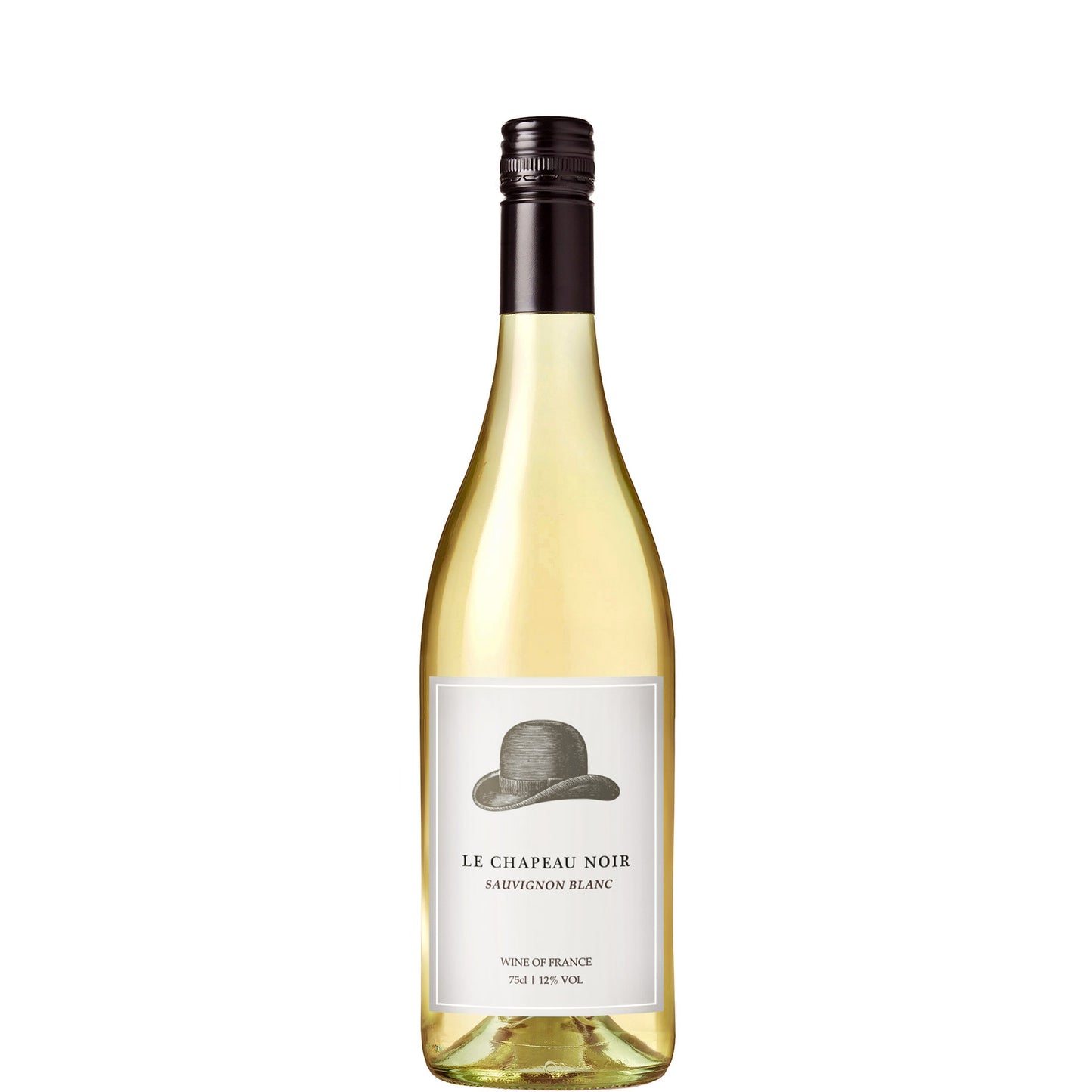
Château Canet, Vignobles Canet Le Chapeau Noir Sauvignon Blanc, 2023
Château Canet, Vignobles Canet Le Chapeau Noir Sauvignon Blanc, 2023
- 75cl
- 12%
- White Still
- Sauvignon Blanc
- Organic
Couldn't load pickup availability

Optimal drinking window: 2026 - 2028
Bright and lively, this pale yellow Sauvignon Blanc with green reflections is bursting with aromatic appeal. Pronounced notes of gooseberry and citrus are complemented by subtle hints of freshly cut hay, leading to a crisp, thirst-quenching finish.
Perfectly versatile, it pairs beautifully with shellfish, goat cheese dishes, poultry, or pasta. A delightful wine offering exceptional value and pure drinking pleasure.
This is a wine built for immediate pleasure, not patience. The 2023 vintage is drinking beautifully right now, with its primary fruit at its most vivid and the acidity doing exactly what it should. By 2027 or 2028, that freshness will start to soften and the gooseberry character will fade. Drink it up while it's singing — there's no secondary complexity waiting to emerge, and holding on any longer would be a missed opportunity rather than a reward.
Tasting Notes
AppearancePale yellow with lively green reflections and good clarity.
NoseGooseberry and fresh citrus lead, with a clean, grassy note underneath — like a hedgerow in early summer. It's aromatic without being showy, and the freshness is immediately appealing.
PalateCrisp and light-bodied, with the gooseberry and lemon carrying through from the nose. There's a pleasant herbal edge — fresh-cut hay, a little green apple — and the acidity is bright without being sharp.
FinishClean and thirst-quenching, with just enough length to satisfy.
Overall impressionA properly refreshing, no-nonsense Sauvignon Blanc that earns every penny of its price.
Food Pairings
In the Languedoc, a wine like this would typically end up on the table alongside a plate of local chèvre — the region produces some of France's finest goat's cheese, and the pairing is almost embarrassingly good. Moules marinières are another natural match, as is any simply grilled fish pulled from the Mediterranean that morning. Locally, you'd also find it poured with a tapenade and crudités spread before a summer lunch, or alongside a salade niçoise when the sun is high and the shade is welcome.
We think this wine would go well with
Serve well chilled, between 8 and 10°C — this is a wine that wants to be cold. No need to decant; just open and pour straight away. A standard white wine glass works perfectly here; there's no need for anything large or wide-bowled, since the aromatics are vibrant enough to do the work without encouragement.
The Languedoc benefits from a Mediterranean climate with long, warm summers and low rainfall, which gives the grapes reliable ripeness year after year. Sauvignon Blanc planted here tends to be grown at higher elevations or in cooler pockets to preserve the variety's natural freshness and acidity. The soils in this part of southern France are typically a mix of clay and limestone, lending structure and a certain mineral backbone even to lighter-styled whites.
Le Chapeau Noir is produced as a Vin de Pays (IGP) rather than under a specific AOC, which gives Château Canet the flexibility to work with Sauvignon Blanc — a variety not traditionally associated with the Languedoc's classic red appellations. The IGP designation covers a vast swathe of southern France and allows for a much wider range of grape varieties and styles than the stricter AOC rules would permit. This freedom is part of why the Languedoc has become such a fertile ground for value-driven, well-made whites over the past two decades.
The 2023 vintage in Languedoc tells the familiar story of a region learning to dance with climate extremes. Spring brought welcome relief after several parched years, with decent rainfall replenishing soils across the sprawling appellations from Corbières to Pic Saint-Loup. Summer heat arrived predictably but without the punishing intensity that has marked recent vintages, allowing the vines to ripen fruit rather than simply survive.
What emerged from the cellars feels like Languedoc finding its modern voice — wines that marry the region's sunny generosity with genuine freshness. The reds show lovely immediacy, particularly Syrah and Grenache blends that deliver spice and dark fruit without the jammy weight that can plague warmer years. We're drinking the early releases now with real pleasure, though the better cuvées will happily cellar for five to eight years. It's a vintage that reminds us why this vast region continues to punch above its weight — honest, expressive wines that don't need to shout to be heard.
FAQs
What does Le Chapeau Noir Sauvignon Blanc taste like?
Bright and refreshing, with gooseberry, lemon, and a fresh-cut grass character that runs all the way through to a clean, crisp finish. It's light-bodied and aromatic — exactly what you want from a well-made Sauvignon Blanc at an accessible price.
When should I drink this wine?
Now. This is a wine designed for immediate enjoyment, and the 2023 is at its best right through until around 2028. After that, the freshness that makes it so appealing will start to fade. Don't save it for a special occasion — it's the kind of bottle that makes an ordinary Tuesday feel like a good idea.
What food pairs well with this wine?
Goat's cheese is the obvious answer, and it's obvious for good reason. Beyond that, shellfish — oysters, mussels, prawns — work very well, as does simply grilled fish. Roast chicken, pasta with herbs, and a good tapenade with crudités are all solid choices too.
How should I serve it?
Serve it cold — between 8 and 10°C. No decanting needed; just open and pour. A standard white wine glass is all it requires.
Is this wine worth cellaring?
No. This is a drink-now wine, and it's all the better for it. The whole point of Le Chapeau Noir is freshness and immediacy. Keep it in the fridge, not the cellar.
Where does this wine come from?
Château Canet is based in the Languedoc in southern France. Le Chapeau Noir is produced as an IGP (Indication Géographique Protégée), which gives the estate the flexibility to work with Sauvignon Blanc — a variety that thrives in the cooler vineyard sites of this sun-drenched region.
Explore related wines


What are you looking for tonight? Tell me the occasion, a grape, a region — or just try a suggestion below.
Your recommendations will appear here.
-
-
Speak to one of our Wine Gurus
Speak to a Wine GuruWith years of experience, our team can help you with all your wine buying and selling needs