

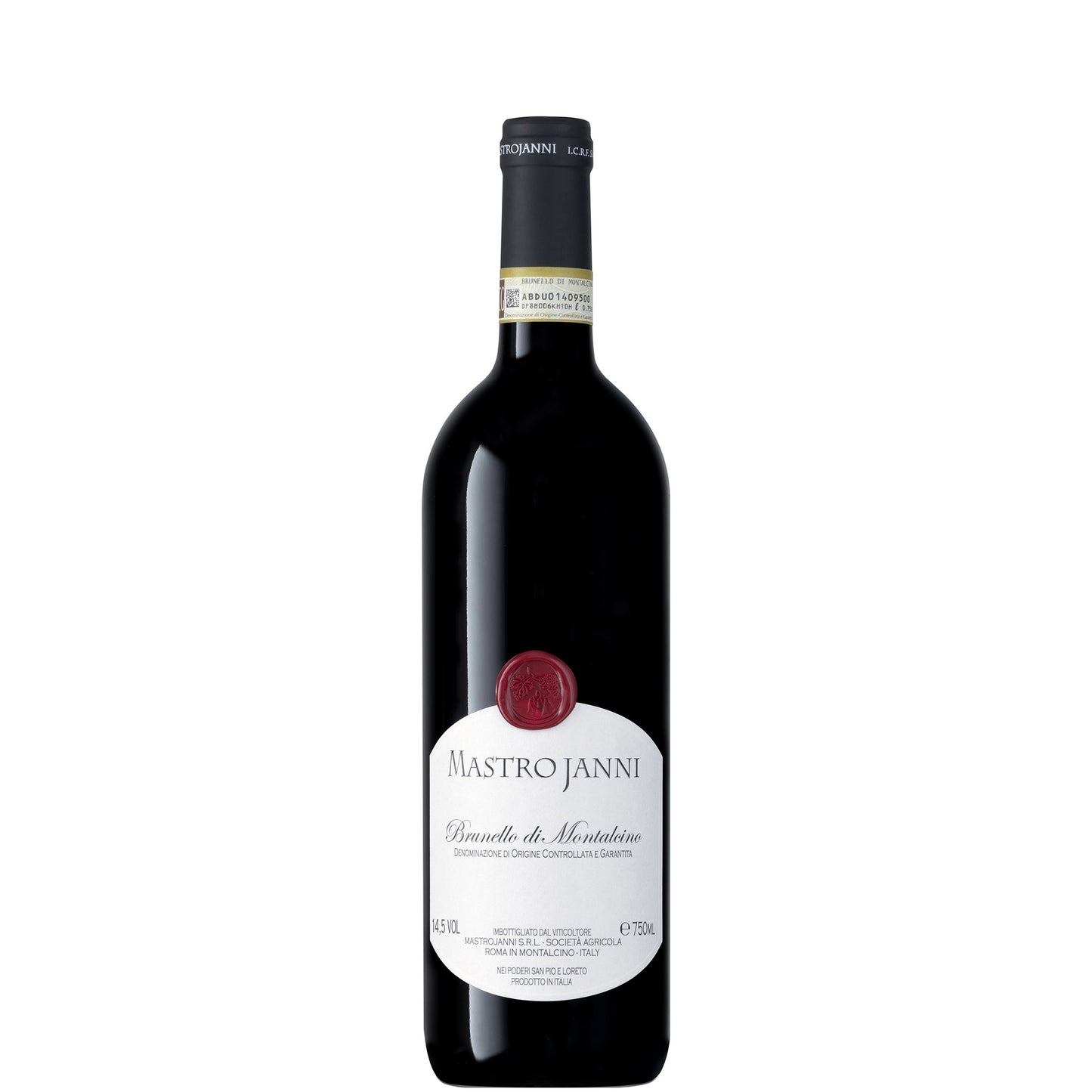
Brunello di Montalcino, Mastrojanni, 2009
Brunello di Montalcino, Mastrojanni, 2009
- 75cl
- 14%
- Red Still
- Sangiovese
Couldn't load pickup availability

Optimal drinking window: Now - 2040
Mastrojanni's 2009 Brunello comes from one of the appellation's most respected estates, perched on the southern slopes of Montalcino above the Orcia valley. The 2009 vintage was warm and generous, producing wines of real flesh and concentration — and this one has used that ripeness wisely, without ever tipping into excess. At seventeen years old it's drinking beautifully in its stride: the tannins have softened to something almost velvet-edged, while the wine's structural backbone — that iron-and-earth character Mastrojanni does so well — keeps everything taut and alive.
On the palate, expect dark cherry, dried rosemary, old leather, and a mineral salinity that lingers long after the glass is empty. This is Sangiovese at its most confident: generous enough to please now, disciplined enough to reward those who wait.
The 2009 Mastrojanni has been moving through a very satisfying middle phase for a few years now — the primary fruit has integrated beautifully with the oak, and the tannins have resolved to a point where drinking it tonight requires no apology. Over the next five years, we'd expect the secondary complexity — the leather, tobacco, and dried herb notes — to deepen further as the fruit gradually recedes. The wine should hold its plateau comfortably until around 2035, and age-worthy examples from good cellars could stay interesting until 2040. After that, it may begin to lose the tension that makes it compelling, though the very best bottles from the estate's top parcels have surprised people before.
What the critics say:
"Bright red. Rich nose offers scents of ripe red cherry, spices and smoke. Dense and suave on the palate, with spicy and peppery nuances to the ripe red cherry, tar and licorice flavors. Finishes long and full, with youthfully chewy tannins. There1s a trace of alcoholic warmth attesting to the southeastern Montalcino location of Mastrojanni1s vineyards, but this is nonetheless one of the best entry-level Brunellos in some time from this estate."
"A clean, fresh red with dried-strawberry and lemon-rind character. Medium to full body, fine tannins and a chewy finish. Always excellent. Drink or hold."
Tasting Notes
AppearanceDeep garnet with a softening ruby rim, clear and bright — the colour of a wine that has aged with composure.
NoseDark cherry and dried plum lead, then give way to dried rosemary, tobacco leaf, and old leather. Underneath it all, that signature Montalcino iron-and-earth note — like the smell of rain on warm flagstones — adds real depth and distinctiveness.
PalateFull-bodied with tannins that have softened considerably since release, now grippy rather than austere. There's a core of dark cherry and dried fig, framed by good acidity and that mineral, almost saline quality that keeps the wine feeling lively and fresh rather than heavy.
FinishLong and savoury, with iron, dried herb, and a faint walnut bitterness that keeps you reaching for the glass.
Overall impressionA wine in its prime: generous enough to enjoy tonight, structured enough to run comfortably into the mid-2030s and beyond.
Food Pairings
Around Montalcino, Brunello is inseparable from bistecca alla Fiorentina — a thick-cut T-bone from Chianina cattle, seasoned with nothing but salt, olive oil, and time over the grill. The locals also love it with wild boar slow-braised with juniper and rosemary, or pappardelle with a rich cinghiale ragù. Aged Pecorino di Pienza, the sharp, crumbly sheep's milk cheese made just a few kilometres away, is another natural pairing — the wine's tannin and acidity cut straight through the fat. In autumn, truffles from the surrounding hills make a regular appearance, shaved over egg pasta with butter, and the combination with a mature Brunello is one of those rare moments of genuine perfection.
We think this wine would go well with
Serve at 17-18°C — too warm and the alcohol dominates, too cool and the tannins close up. Decanting is well worth the effort: an hour in the decanter will open the wine up considerably, softening any remaining structural edges and allowing the aromatic complexity to unfold. A large-bowled Bordeaux or Burgundy-style glass gives it the space it needs to breathe and express itself properly.
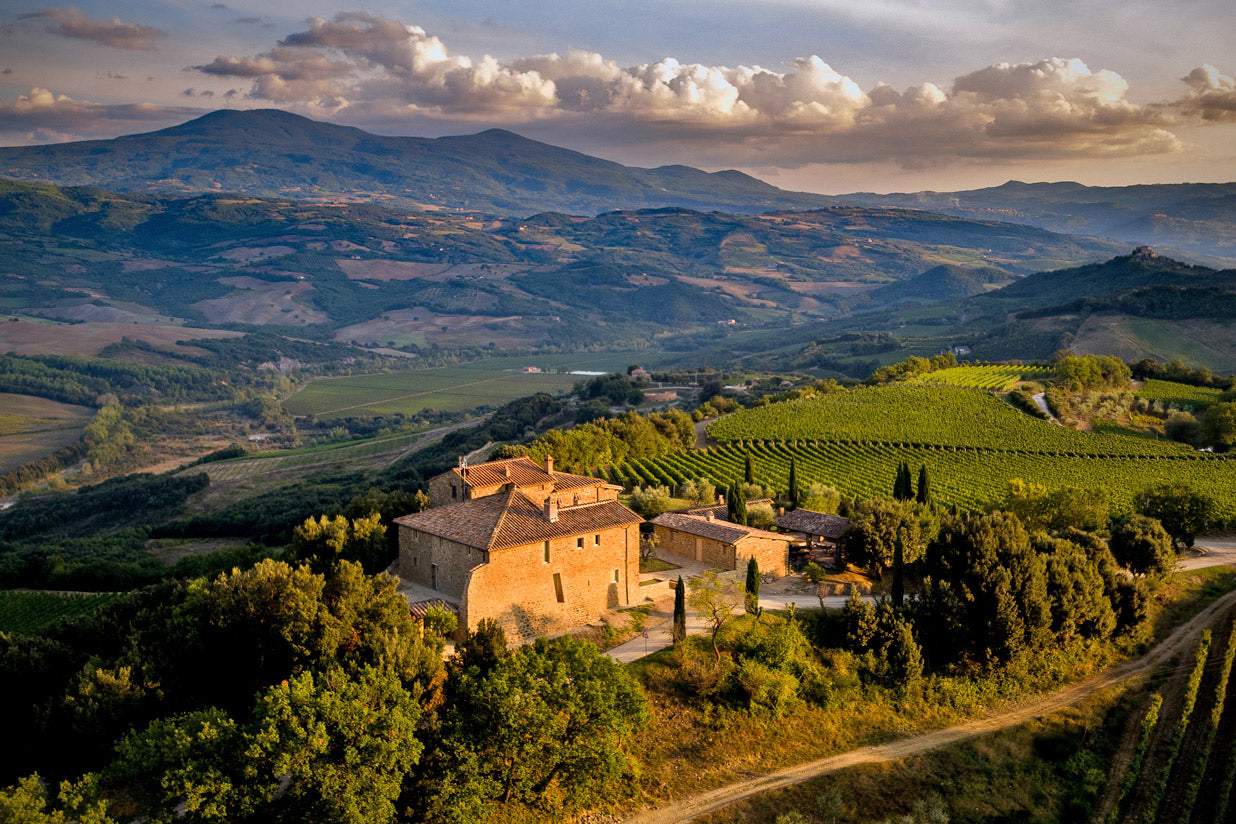
The Mastrojanni vineyards sit at around 350 metres on the south-eastern flanks of Montalcino, where the soils are a mix of galestro — the friable, schist-like rock that drains brilliantly and stresses the vine into concentration — and clay-rich tufa. This southern exposure gives more warmth and ripeness than estates on the cooler northern slopes, which shows in the flesh and body of the wines. The proximity to Monte Amiata provides afternoon shade and cooling breezes, preserving freshness and aromatic lift that south-facing sites can easily lose.
Brunello di Montalcino is Italy's most celebrated red wine appellation, built entirely on Sangiovese Grosso (locally called Brunello) grown within the commune of Montalcino in southern Tuscany. The DOCG rules require a minimum of five years ageing from harvest — six for Riserva — with at least two years in oak and four months in bottle, making it one of the longest mandatory ageing regimes in Italy. The result is wine of real structural ambition: high tannin, high acidity, and the kind of longevity that puts it in the same conversation as Barolo and the great Bordeaux. Unlike Chianti Classico to the north, Brunello is a single-commune, single-variety appellation with no blending permitted.
The 2009 vintage in Tuscany delivered exactly what collectors dream about: a long, warm growing season that let the grapes ripen slowly and completely. A dry summer kept disease pressure low whilst preserving crucial acidity, and the harvest stretched into October under clear skies. This was the sort of vintage that reminded everyone why Tuscany built its reputation on Sangiovese in the first place.
What emerged were wines with real backbone and staying power - Sangiovese that actually tastes like itself rather than trying to be something else, with that characteristic cherry brightness wrapped around serious tannins. The Super Tuscans from this year show remarkable concentration without the overripe heaviness that can plague warm vintages, whilst the Chiantis have that perfect marriage of fruit and earth that makes you remember why you fell in love with Italian wine. Most are drinking superbly now, though the best Brunellos and top-tier blends will reward patience until 2030.
FAQs
What does this wine taste like?
Dark cherry, dried plum, rosemary, old leather, and a distinctive iron-and-earth mineral quality. The 2009 vintage adds extra flesh and concentration compared to leaner years, but Mastrojanni's structure keeps it disciplined. The tannins have softened considerably at this age, making it genuinely pleasurable to drink now.
When should I drink this wine?
It's drinking very well right now and has been for a few years. We'd say the window runs comfortably until 2040, with the sweet spot probably somewhere in the next five to eight years. There's no rush, but no need to wait either — it's in a great place.
Do I need to decant it?
Yes, and we'd give it at least an hour. Even at seventeen years old, this wine opens up meaningfully with air — the aromatics unfold, the tannins soften, and the mineral character becomes more pronounced. If you're patient, two hours won't hurt it at all.
What food should I serve with this?
Think along the lines of a serious piece of red meat — a bistecca, slow-braised wild boar, or a rich beef ragù over pappardelle. Aged hard cheeses work brilliantly too, particularly aged Pecorino or Parmigiano-Reggiano. Avoid anything delicate: this wine wants food that can stand up to it.
Is it worth cellaring further?
It's already rewarding drinking, so cellaring further is a matter of preference rather than necessity. If you want to see how the dried fruit and tobacco notes develop as the primary cherry recedes, another five to ten years would be interesting. Just make sure your cellar is stable — this wine deserves the right conditions.
How does Mastrojanni compare to other Brunello producers?
Mastrojanni sits comfortably in the upper tier of Montalcino producers. Their southern-slope vineyards in Castelnuovo dell'Abate give them a warmer, more generous style than estates on the cooler northern side of the hill, but the wines never feel overblown. They're serious without being showy, which is exactly the right ambition for Brunello.
Explore related wines


What are you looking for tonight? Tell me the occasion, a grape, a region — or just try a suggestion below.
Your recommendations will appear here.
-
-
Speak to one of our Wine Gurus
Speak to a Wine GuruWith years of experience, our team can help you with all your wine buying and selling needs