

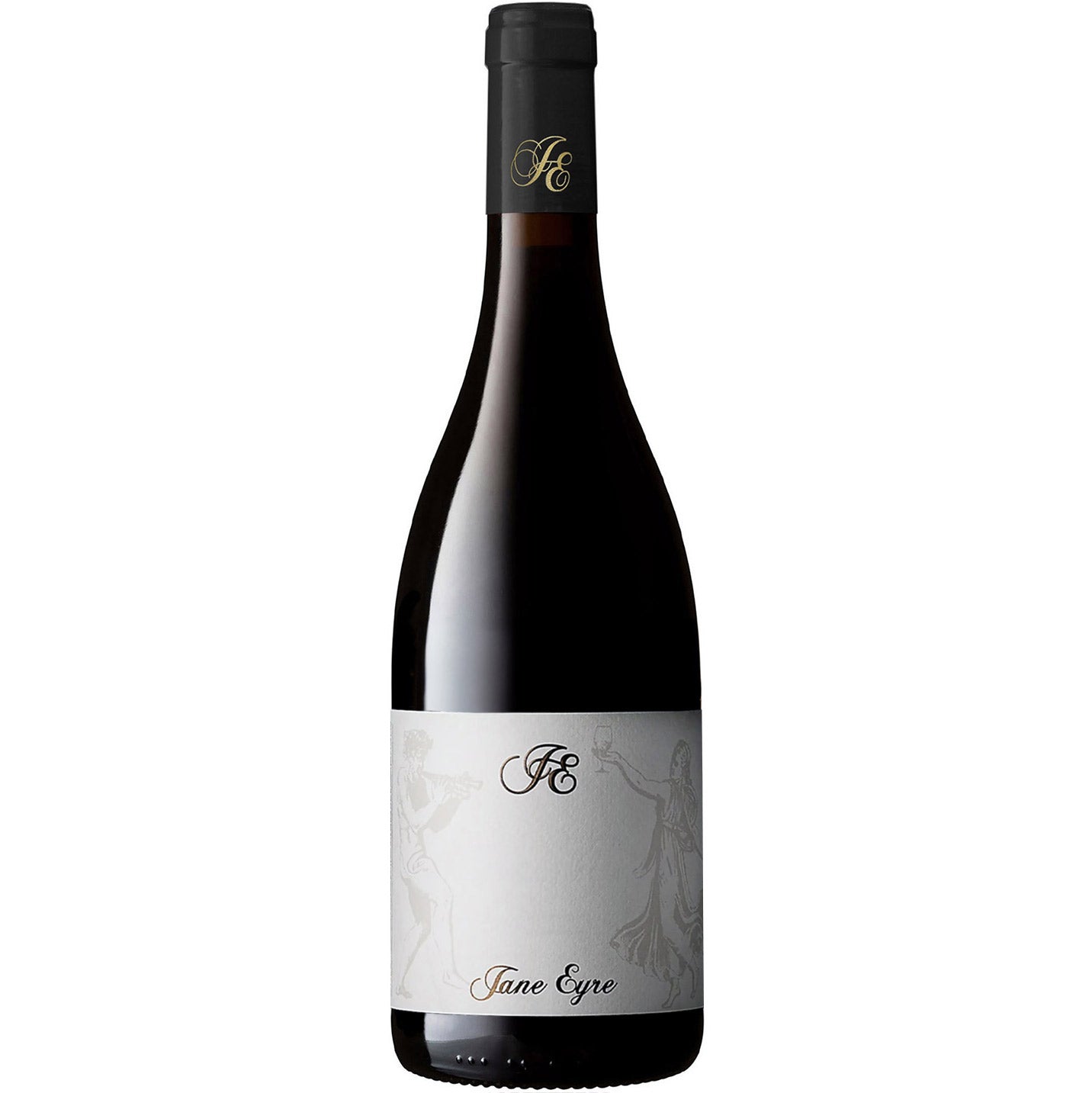
Beaune Premier Cru 'Les Grèves' Rouge, Jane Eyre, 2024 - Magnum
Beaune Premier Cru 'Les Grèves' Rouge, Jane Eyre, 2024 - Magnum
- 150cl
- 13%
- Red Still
- Pinot Noir
Couldn't load pickup availability

Optimal drinking window: 2028 - 2042
Les Grèves is one of Beaune's most admired Premier Cru lieux-dits, a long, south-facing slope whose name, 'the gravels', tells you everything about the well-drained, mineral-rich soils that give Pinot Noir here its characteristic finesse.
2024 could hardly suit Jane Eyre better. A cool, rain-affected year with low natural alcohols and sharply reduced volumes, it demanded obsessive sorting and restraint in the cellar. Jane delivered both. Whole-bunch use was carefully judged and varied by cuvée. In a vintage where some light-touch producers struggled to find flavour, Jane’s wines retain purity, energy, and real Pinot character.
"A small parcel close to town. Darker in colour, with compact, dark fruit and a more muscular tannic frame. Serious, structured, and built for patience."
Stewart Pryce, Honest Grapes Wine Club Manager
Drink it from 2027 as the primary fruit settles.
Right now, Les Grèves is locked in on itself — the dark fruit compact, the tannins assertive, the whole thing coiled rather than open. By 2028 or 2029, the fruit will start to soften and integrate, with the gravelly mineral character of the vineyard beginning to assert itself more clearly. Between 2029 and 2032 is likely the sweet spot: structured still, but with the complexity that comes from a few years of quiet bottle development. The magnum format adds a layer of insurance here — slower ageing means the fruit and tannin will find their balance more gently, and the wine should hold comfortably until 2034 or 2035. Beyond that, it will depend on storage, but great Beaune Premier Cru in magnum rarely disappoints the patient.
What the critics say:
"In bottle. Two barrels made. A glowing ruby purple, with more density here. The nose too suggests sufficient concentration. Some tannins, good acidity, the gravelly tones expected from this vineyard but with a vibrant red fruit too. Drink from 2029-2034. Tasted Oct 2025. *4/5*"
Tasting Notes
AppearanceBright, translucent ruby with a pale garnet rim — the hallmark clarity of well-made 2024 Burgundy.
NoseFresh red cherry, crushed violet, and a cool thread of wet stone run through the centre of the glass. There is a subtle floral lift that speaks to whole-bunch influence, and a faint dried rose petal quality that emerges with a little air. Still quite primary at this stage, but the bones of something more complex are clearly present.
PalateMedium-bodied with silky, finely grained tannins and a core of bright, precise red fruit — sour cherry, redcurrant, a hint of pomegranate. The acidity is the real story here: fresh, saline, and persistent, keeping everything taut and focused without austerity. There is real depth on the mid-palate that the 2024 vintage's reputation for lightness might lead you to underestimate.
FinishLong, mineral, and dry, with a lingering chalky persistence and a final whisper of spice.
Overall impressionA wine of real precision and restraint that rewards patience more than it rewards impatience.
Food Pairings
In Beaune and the surrounding Côte d'Or, a wine like this would most naturally find itself opposite a poulet de Bresse roasted simply with butter and tarragon — the chicken's richness balanced by the wine's acidity in a way that feels almost inevitable. Locals would also reach for this alongside a classic coq au vin, where the earthy depth of the dish echoes the wine's mineral and spice character. A plateau of Burgundian charcuterie — jambon persillé, rosette de Lyon, cornichons — makes a more relaxed but equally convincing partner. And for cheese, a well-aged Époisses or a ripe Langres would be the regional choice, though the wine's tannin structure means it handles both better than most delicate Burgundy.
We think this wine would go well with
Serve at 15-16°C — slightly cooler than many would instinctively reach for, which preserves the wine's freshness and keeps that mineral spine in focus. At only two years old, a 30-minute decant would do no harm and will begin to open the nose, though the wine is still young enough that it will close back up fairly quickly. In magnum format, give it a full hour if you are opening it young. A large-bowled Burgundy glass — Zalto Burgundy or the Riedel Vinum equivalent — will give the wine the room it needs to show its aromatic complexity.
Les Grèves sits on the mid-slope of the Beaune premier cru hierarchy, on well-drained limestone and clay soils with a pronounced chalky subsoil that gives the wines their distinctive mineral edge. The south and south-east aspect means good sun exposure without the excessive heat that can flatten Pinot Noir's aromatic profile. This combination of limestone drainage and cooler overnight temperatures preserves the acidity that makes Grèves age so gracefully. The name itself — grèves means gravel or shingle in old French — hints at the stony, free-draining character of the land.
Beaune Premier Cru is one of Burgundy's most extensive premier cru appellations, with over 300 hectares of classified vineyard land spread across more than 40 named sites. Les Grèves, at around 31 hectares, is the largest single premier cru in Beaune and widely regarded as one of its finest, producing wines that balance Beaune's characteristic suppleness with genuine structure and ageing potential. Unlike the grands crus of Gevrey or Chambolle to the north, Beaune has no grand cru vineyards — a quirk of history rather than quality — which means that wines like Les Grèves represent the appellation's absolute ceiling. The rules require 100% Pinot Noir for red wines, with minimum ageing in barrel before release.
The 2024 growing season in Burgundy was, frankly, a test of nerve. A wet spring brought significant mildew pressure, and vignerons who stayed sharp in the vineyard — working fast, keeping canopies open, reducing yields where necessary — came out the other side with something worth talking about. Summer brought warmer, drier conditions that helped the fruit recover composure, and harvest arrived broadly on the later side, with growers picking carefully to find phenolic ripeness without sacrificing freshness. Quantity was down across much of the Côte, which concentrates minds as much as it concentrates wine.
What emerged is a vintage that rewards those who put the work in. The Pinots we have tasted carry real precision and translucency — not because they are light, but because the acidity is lively and the fruit unforced. Chardonnays from the Côte de Beaune look particularly promising: taut, mineral, with genuine length. This is not a vintage to panic-open. Most village and premier cru reds want three to five years at minimum, with the better appellations drinking well until 2035 and beyond. The whites are more approachable now, though the best will reward patience too.
FAQs
What does this wine taste like?
Think fresh red cherry, violet, and crushed stone, with silky tannins and a long, saline mineral finish. It is precise and structured rather than rich or opulent — a wine about tension and focus rather than generosity.
When is the best time to drink this?
It needs a little more time. We would hold off until at least 2028, and ideally 2030, to let the secondary complexity develop. In magnum, it should remain at its best until 2042 and possibly beyond — a serious candidate for the cellar.
Why buy this in magnum?
Magnums age more slowly and more gracefully than standard bottles, because the ratio of wine to air in the closure is more favourable. For a wine this age-worthy, the format is not just impressive at the table — it is genuinely the better way to experience it at its peak.
What food should I serve with this?
Roast chicken with tarragon butter is the classic local match — simple, rich, and perfectly calibrated to the wine's acidity. Coq au vin, Burgundian charcuterie, or a ripe washed-rind cheese like Époisses would all work equally well.
How should I serve it?
Serve at around 15-16°C and decant for at least 30 to 60 minutes, particularly if you are opening it while it is still young. A large Burgundy glass will give the wine room to open up and show its aromatic range.
How does Les Grèves compare to other Beaune premier crus?
Les Grèves is the largest and widely considered the finest premier cru in Beaune, with a structure and mineral depth that sets it apart from the more immediately approachable sites on the lower slopes. Beaune has no grand crus — a historical oddity rather than a quality judgement — which means Grèves effectively represents the appellation's ceiling.
Explore related wines


What are you looking for tonight? Tell me the occasion, a grape, a region — or just try a suggestion below.
Your recommendations will appear here.
-
-
Speak to one of our Wine Gurus
Speak to a Wine GuruWith years of experience, our team can help you with all your wine buying and selling needs