

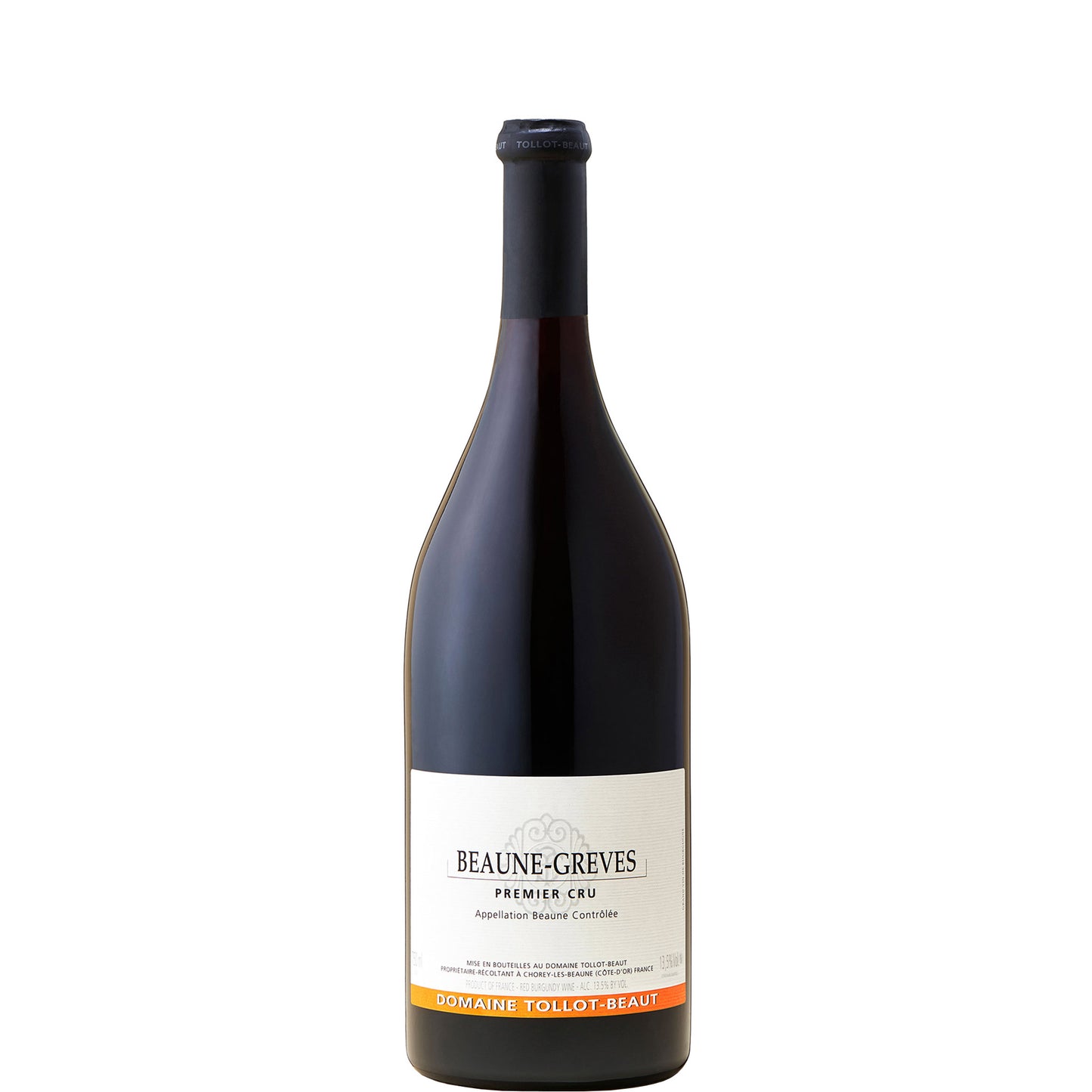
Beaune Premier Cru 'Grèves', Domaine Tollot-Beaut, 2024
Beaune Premier Cru 'Grèves', Domaine Tollot-Beaut, 2024
- 75cl
- 13%
- Red Still
- Pinot Noir
Couldn't load pickup availability

Optimal drinking window: 2028 - 2038
Tollot-Beaut is one of the most reliable names in Beaune, a family domaine that has been farming these slopes since the 1880s and has never needed to shout about it. Their Grèves is among the finest things they do: a premier cru site on Beaune's northern flank that produces Pinot of real refinement, with that characteristic Grèves combination of silky texture and stony, mineral precision.
"Broad-shouldered but never heavy. Autumnal forest floor on the nose, with juicy plum and mixed berries on the palate, lifted by floral notes and a touch of clove."
Ksenia Pashkova, Club Merchandiser
The 2024 vintage, shaped by a cool, late-ripening season, brought freshness and lift to wines across the Côte de Beaune, and this is no exception.
"As to the style, 2024 is definitely a cooler vintage with good freshness and transparency and it makes me think of our 2010s. I was very impressed by the quality I found here and a number of the wines are very much worth your interest."
Allen Meadows, Burghound on Tollot Beaut's 2024 vintage
Right now the fruit is primary, the oak is present, and the wine has not yet settled into itself. From around 2028 it should start to open properly, the cherry fruit deepening into something more like Morello and dried hedgerow, and the mineral thread becoming more prominent. The mid-point of its drinking window, around 2031 to 2034, is likely where it will be most expressive and complex. After 2036 it will depend heavily on storage conditions, but wines from a cool, fresh vintage like 2024 sometimes fade more gracefully than they peak dramatically.
What the critics say:
"The 2024 Beaune Les Grèves 1er Cru has a composed, perhaps more precise bouquet than the Clos du Roi, more terroir-driven. The palate is medium-bodied with smooth tannins, well-judged acidity, quite spicy towards the finish that possesses pleasing edginess. Recommended."
"Medium crimson with a slightly lighter rim. The nose is restrained but has more gravitas than the Clos du Roi. All in a clean red fruit but there is more tension here, a good fruit-acid balance with the refined tannins of the vintage (except where they are green). A touch of umami at the finish to make one salivate. Drink from 2029-2034. Tasted Oct 2025. *4/5 stars*"
"A more deeply pitched and earthier nose reflects layered aromas of both red and dark currant, newly turned earth and a pretty array of spice nuances. There is very good size, weight and power to the tautly muscular medium weight flavors that deliver very fine length on the ever-so-mildly rustic finale. This firmly structured effort should amply reward mid-term keeping out to a decade. One to look for. 'Sweet spot', 'Outstanding'"
Tasting Notes
AppearanceClear, mid-ruby with a bright, transparent rim — the kind of colour that catches light well in the glass.
NoseFresh red cherry and raspberry at first, then dried rose and a faint whiff of iron and damp earth as it opens. There is a cool, almost stony quality underneath that speaks directly to the Grèves soil.
PalateSilky and fine-grained on entry, with good energy through the mid-palate — that gravelly mineral thread holds everything together. The fruit is still a little primary and the oak has not yet fully knitted in, but the bones of something very good are clearly here.
FinishLong and clean, with a lingering chalky mineral grip and a faint savouriness that keeps drawing you back.
Overall impressionA composed, mineral Beaune that needs a couple of years to speak at full volume.
Food Pairings
In the villages around Beaune, this kind of wine is most at home alongside poulet de Bresse roasted simply with herbs and butter — the acidity of the wine cuts through the richness and the minerality lifts everything. Oeufs en meurette, poached eggs in a red wine sauce, is a classic local pairing that works brilliantly with premier cru Beaune's savoury, earthy character. A plateau of Burgundian charcuterie — jambon persillé, gougères still warm from the oven — is exactly the kind of thing that makes a bottle disappear faster than intended. Slightly more ambitious cooks might try it with veal kidneys in a mustard cream sauce, which is a Beaune restaurant staple and a natural match for this kind of structured, food-friendly Pinot.
We think this wine would go well with
Serve at around 15-16°C — slightly cooler than you might think, as Pinot Noir opens beautifully with a little chill and warms in the glass. At this stage of its life, a 30-minute decant is worth doing to soften the oak and coax out some of the more reticent fruit. A wide-bowled Burgundy glass is the right call — it gives the wine the surface area it needs to express its more delicate aromatics rather than concentrating them too intensely.
The Grèves vineyard sits on the upper-middle slopes of Beaune's northern flank, at roughly 270 metres, with a gentle east-facing incline that captures morning sun while avoiding the afternoon heat. The soils are a mix of Jurassic limestone, marl, and the gravelly, well-drained material that gives the climat its name — grèves meaning gravel in old Burgundian French. This drainage keeps the vines under just enough stress to concentrate flavour without losing freshness, and the limestone underpins that characteristic mineral tension through the wine.
Beaune Premier Cru is the workhorse appellation of the Côte de Beaune, though that undersells it considerably — Beaune has more premier cru land than any other commune in Burgundy, and the best sites rival many grands crus for sheer pleasure and age-worthiness. Grèves is among the most consistently praised of its 42 classified lieux-dits, historically associated with finesse rather than power. Wines must be made from Pinot Noir and meet minimum ageing requirements before release. Compared to Pommard to the south, Beaune premier cru tends to be more perfumed and finer-grained; compared to Volnay, it often shows a little more structure and weight.
The 2024 growing season in Burgundy was, frankly, a test of nerve. A wet spring brought significant mildew pressure, and vignerons who stayed sharp in the vineyard — working fast, keeping canopies open, reducing yields where necessary — came out the other side with something worth talking about. Summer brought warmer, drier conditions that helped the fruit recover composure, and harvest arrived broadly on the later side, with growers picking carefully to find phenolic ripeness without sacrificing freshness. Quantity was down across much of the Côte, which concentrates minds as much as it concentrates wine.
What emerged is a vintage that rewards those who put the work in. The Pinots we have tasted carry real precision and translucency — not because they are light, but because the acidity is lively and the fruit unforced. Chardonnays from the Côte de Beaune look particularly promising: taut, mineral, with genuine length. This is not a vintage to panic-open. Most village and premier cru reds want three to five years at minimum, with the better appellations drinking well until 2035 and beyond. The whites are more approachable now, though the best will reward patience too.
FAQs
What does Tollot-Beaut's Grèves taste like?
Silky and mineral, with fresh red cherry, dried rose, and a stony, almost chalky quality running through the palate. It is a refined, food-friendly style of Beaune rather than a big, extracted one — precision over power.
When should I drink this wine?
We would leave it until at least 2028 to allow the oak to integrate and the fruit to develop more complexity. It should drink well until around 2038, with the most interesting window somewhere in the early 2030s.
Is Grèves one of the best premier cru sites in Beaune?
It is consistently among the top handful. The gravelly, well-drained soils give wines a minerality and finesse that set them apart from some of the more structured, clay-heavy sites further south. Historically it has been held in very high regard, sometimes mentioned alongside the finest Beaune premier crus.
What food should I serve with this?
Classic Burgundian fare works perfectly — roast chicken, jambon persillé, oeufs en meurette, or veal in a cream sauce. It is a wine built for the table rather than the tasting room, and it rewards simple, well-made dishes more than complicated ones.
How should I serve it?
Slightly cooler than room temperature — around 15-16°C. A brief decant of 30 minutes or so will help open up the nose and soften the oak at this early stage. Use a wide-bowled Burgundy glass.
Is the 2024 vintage good in Beaune?
2024 was a cool, late-ripening year in Burgundy that rewarded patient growers with wines of genuine freshness and mineral precision. It is not a vintage of concentration and weight, but one of energy and lift — exactly the kind of character that suits a site like Grèves.

Explore related wines


What are you looking for tonight? Tell me the occasion, a grape, a region — or just try a suggestion below.
Your recommendations will appear here.
-
-
Speak to one of our Wine Gurus
Speak to a Wine GuruWith years of experience, our team can help you with all your wine buying and selling needs